 SUNSET:


Discovery of a Recent Martian Mudslide
A geologically recent landslide on Mars appears like mudslides on Earth — but it would have required water during a time when Mars was expected to be dry.

This Week's Sky at a Glance, August 20 – 28
Jupiter and Saturn are just past opposition, so they dominate the sky all night. They inhabit dim Capricornus, which pushes Sagittarius westward. Venus, even showier, owns the western twilight but sets by full darkness.

The 12-Year Cycle of Jupiter Oppositions
Jupiter is at opposition on August 19th. If we take the long view — 12 years long — we can watch Jupiter's oppositions as it passes through the zodiac constellations.

Venus: Thin-skinned and Likely to Blow
Scientists found a strange little volcanic feature on the edge of a Venusian corona, giving further credence to the theory that the planet has a thin outer layer and an active interior.

Jupiter Dazzles at Its Brightest and Closest This Year
Jupiter comes to opposition on August 20th, when it will shine brighter and closer than at any other time this year. With nights starting earlier and cooler temperatures arriving, there's no better time to make the most of the planet.

Saturn Has a Fuzzy Core, Too
New research reveals that Saturn, like Jupiter, has a “fuzzy” core that extends 60% of the way to its surface, a finding that is changing how astronomers think about giant planets.

Gale Crater on Mars: An Ancient Lake or Just Puddles?
A new study suggests that wind, not water, created the rock layers in Gale Crater, where the Curiosity rover roams.

How Black Holes Eat Reveals Their Mass
No one knows why quasars flicker — but astronomers are using these wavering beacons to "weigh" the black holes that power them.

This Week's Sky at a Glance, August 13 – 21
The Moon waxes from first quarter to gibbous in the evening sky, offering some of its most interesting telescopic aspects. Venus grows more insistent in the western twilight. And Jupiter and especially Saturn pose well in the southeast to south by late evening.

Fine Show Expected from the Perseid Meteor Shower
With no interference from the Moon, this year's Perseid meteor shower should be excellent. If you couldn't catch the show last night, try looking up tonight!

Mars Perseverance Rover Hits a Snag on First Sampling Attempt (Update)
Perseverance came up empty on its first attempt to grab and stow a sample of Mars.

Don’t Worry About Bennu (Yet)
Careful measurements using the OSIRIS-REX spacecraft have refined astronomers’ predictions for how likely it is that this potentially hazardous asteroid will strike Earth.

Learn to Star-hop in the August Sky
Learn to star-hop your way to celestial treasures in the August sky.

Red Dwarfs Aren’t So Bad (For Planets) After All
Red dwarf stars appear to flare preferentially at high latitudes, which might keep their exoplanets habitable instead of hellish.

Recurrent Nova RS Ophiuchi Just Blew its Top!
The recurrent nova RS Ophiuchi just went into outburst — its first burst in 15 years — and it's bright enough to see with the naked eye

S&T Editor Wins Planetary Science Writing Award
Science Editor Camille Carlisle has won the Division of Planetary Science’s Jonathan Eberhart Planetary Sciences Journalism Award for “Rugged Worlds,” the cover story of the May 2020 issue of Sky & Telescope.

Two Space Probes to Pass by Venus (Update)
Two spacecraft are heading for a close Venus encounter: Solar Orbiter passes by on August 9th and BepiColombo on August 10th.

This Week's Sky at a Glance, August 6 – 14
It's Perseid meteor week! Venus lights the western twilight. Saturn and Jupiter are up in the southeast by mid-twilight and await your telescope later at night. And explore the deep-sky glories of Sagittarius before moonlight returns.
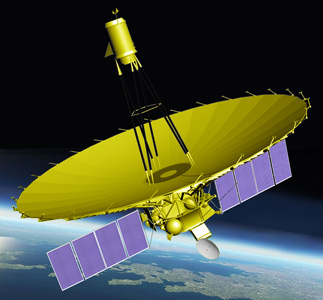
Russian Rocket Booster to Reenter Early Next Week
The spent rocket booster that deployed the Russian Spektr-R satellite a decade ago is now set to burn up over the Indian Ocean on Monday, August 9th.

Two Extremely Red Asteroids Discovered Far from Home
Astronomers have discovered the two reddest objects in the asteroid belt, and their origin story might tell us more about planet formation.
