 SUNSET:


Juno’s Ganymede Flyby: Video Update
NASA's Juno flew by Jupiter's Ganymede, the biggest moon in the solar system, on June 7, 2021.
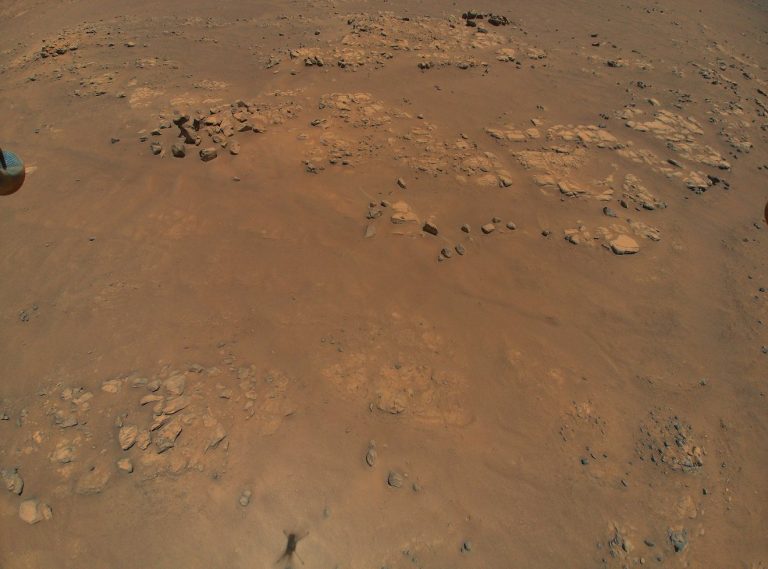
Mars Helicopter Scouts Risky Terrain for Perseverance Rover
The Ingenuity Mars helicopter has proven itself a valuable asset to Perseverance, scouting out terrain that the rover can't cross.

NASA’s Kepler Finds Outcast Earths
Astronomers uncovered four new Earth-mass rogue planet candidates by searching for microlensing events observed with Kepler.

This Week's Sky at a Glance, July 9 – 17
Bright Venus and tiny Mars come to conjunction low in the western twilight, as the crescent Moon stands watch. On the other side of the sky, Saturn and Jupiter rise after dark. And before moonlight comes back, delve the deep sky in Scorpius and Sagittarius.

What Will ESA's EnVision Learn at Venus?
ESA's EnVision mission to Venus adds to the growing number of spacecraft investigating our sister planet. How will they work together to understand our sister planet'?

Amateur Astronomer Discovers New Moon of Jupiter
An amateur astronomer has discovered a new moon of Jupiter. While it hasn't received official designation yet, it would bring the tally of Jovian satellites to 80.

NASA’s Curiosity Takes Step Toward Solving Mars Methane Mystery
New measurements from NASA’s Curiosity rover show that methane concentrations near the Martian surface vary on a daily cycle. The finding could help reconcile conflicting data.

More Mysterious Buried Splotches on Mars Might Not be Liquid Water
Astronomers find more bright spots underneath Mars's south polar cap, but could they really be subterranean lakes?

This Week's Sky at a Glance, July 2 – 10
Bright Venus and faint little Mars close in on each other low in the western twilight. Scorpius, laden with interesting stars and deep-sky targets, is highest in the south right after dark. Sagittarius, even richer, follows behind. Saturn and Jupiter rise in late evening.
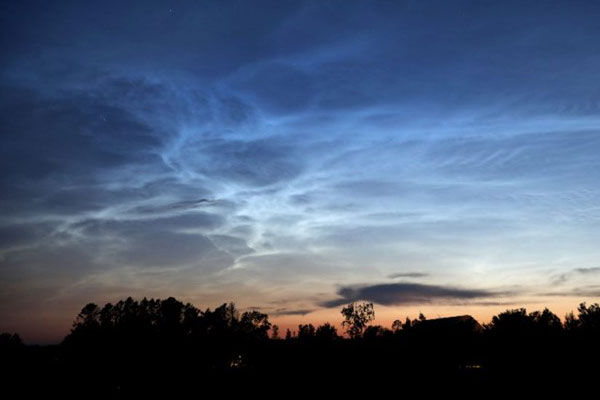
Noctilucent Cloud Show, a Mercurial Nova, and More
Summer only lasts so long. Like everything, it's transient. That will be our theme as we explore wispy noctilucent clouds, a nova that can't sit still, and a supernova in NGC 5427 in Virgo.

Return of the Star Parties
As many states roll back COVID restrictions, stargazers across the continent are excited to meet up with old and new friends at their favorite observing sites.

July: Inner Planets Rule!
True darkness is fleeting in July, especially at higher latitudes. So make the most of the darkness you have, by downloading our narrated Sky Tour podcast to "what's up" in the night sky.

Moon-size White Dwarf Is the Smallest Ever Found
Astronomers have discovered a white dwarf only slightly bigger than the Moon, making it the smallest ever found. It might even be on the edge of collapse.

Gravitational Waves Reveal Black Hole–Neutron Star Mergers
Two new detections give astrophysicists a novel look at how stellar remnants pair up.

Venus Surface Is Fragmented Like “Pack Ice”
A new analysis of old data suggests that some of our sister planet’s unique surface formations are due to a “squishy” crust and an active interior.
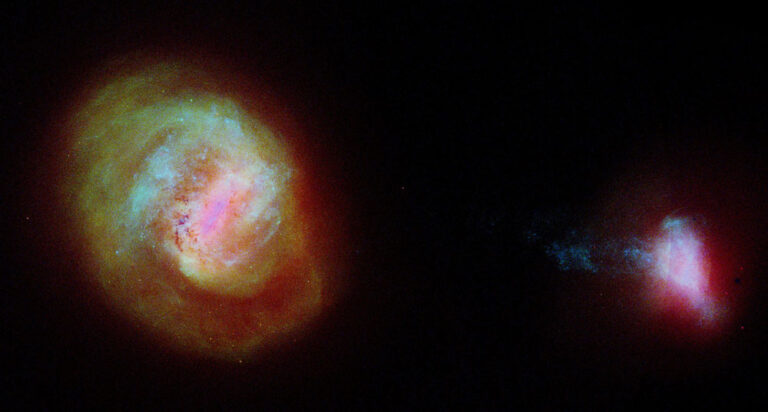
Galaxies That Evolve Together But Don’t Stay Together
A study of 36 dwarf galaxies within a volume of space spanning 13 million light-years show they all have remarkably similar histories despite the vast distances between them.

This Week's Sky at a Glance, June 25 – July 3
Showy Venus and shy little Mars draw closer together in the western dusk. In the east, the Summer Triangle holds sway after dark with the Milky Way behind it.

Astronomers Map the Solar System's Edge in 3D
Collecting high-speed atoms has enabled researchers to trace the shape of our Sun’s protective bubble.
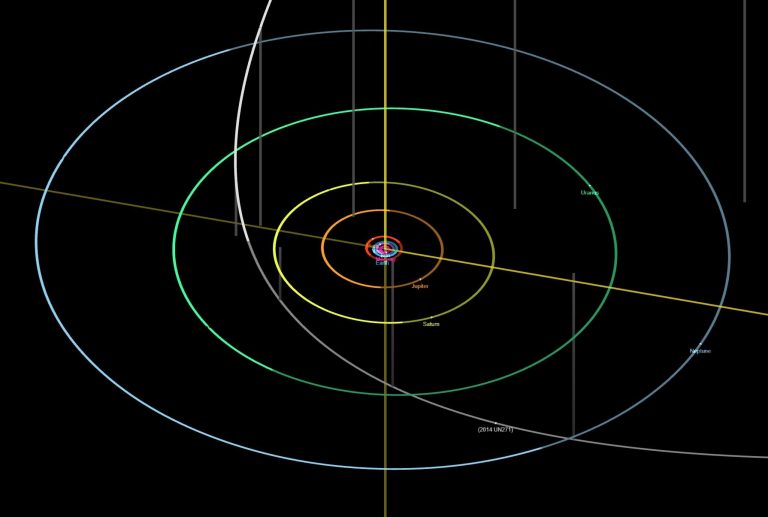
Giant Oort Cloud Comet Lights Up in the Outer Solar System
Astronomers have discovered a new comet coming from the Oort Cloud — and it appears to be a big one.

The Giant Star That "Blinked"
Astronomers are trying to understand why a giant star "blinked," fading almost completely before brightening again over the course of about 200 days.
