 SUNSET:


Evenings with the Ring Nebula
Everyone loves this cosmic donut. Like Saturn, the Ring Nebula is a must-see for beginners and seasoned amateurs alike. Whether you're just cutting your deep-sky teeth or attempting to see its central star — one of visual astronomy's Holy Grails — the Ring has it all.

June 2020: Stars of Early Summer
Our 10-minute Sky Tour astronomy podcast guides you to planets, stars, and constellations in the early-summer sky in a casual, engaging way that your whole family can enjoy.

This Week's Sky at a Glance, May 29 – June 6
Bright Capella is still up in the northwest in twilight, but it sets in the northwest fairly soon after dark. That leaves Vega and Arcturus as the brightest two stars in the evening sky. Both are magnitude 0. Vega shines in the east-northeast. Arcturus is very high toward the south.

Stargazer's Corner: Adventures Under the Night Sky
95 Sunrises Along the Columbia Riverbank
Margaret Greenwood explores the changing location of sunrises throughout the year.
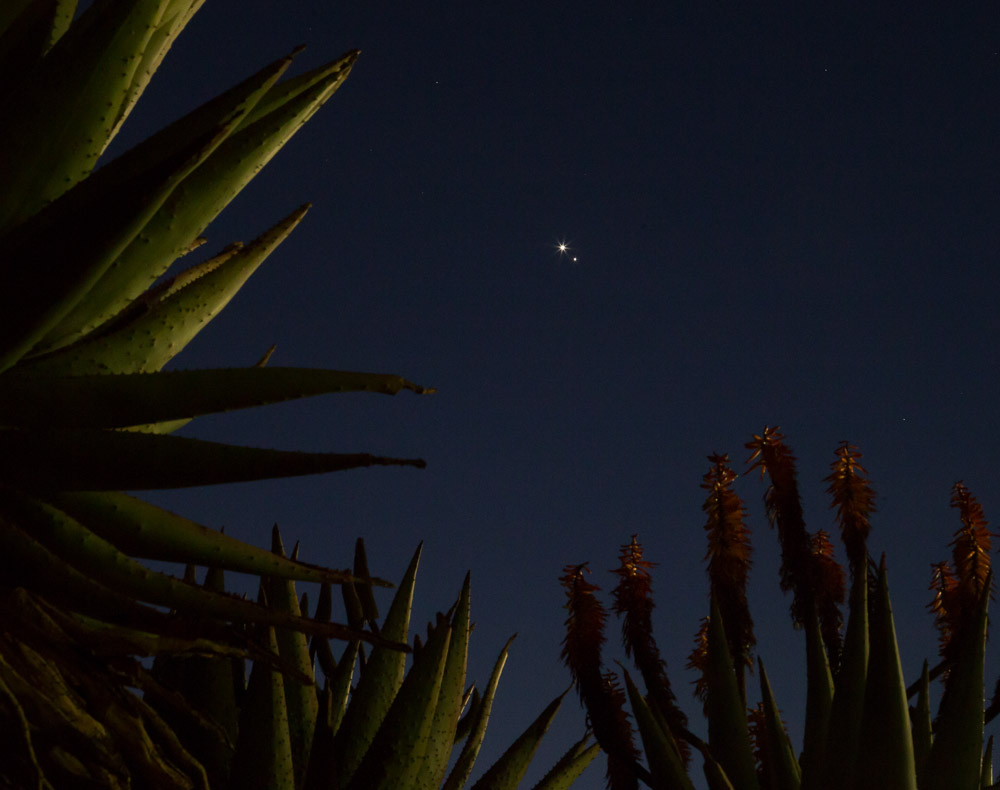
How Bright Are the Planets?
What do Venus and Jupiter have in common? Revisions to planets' magnitudes in this year's Astronomical Almanac have revealed some surprises.

Globular Clusters Await: Hello, Messier 3!
Globular cluster season is here. Time to get out your charts, binoculars, and telescopes and enjoy these wondrous objects.
This Week's Sky at a Glance, May 22 – 30
Venus is a super-thin crescent as it plunges down to the sunset horizon this week. Bring out the telescope and/or binoculars. Mercury, also in the western evening twilight, is a tiny "half Moon" with a much less intense surface brightness.

See Spring's Finest Spiral Galaxies
Spring skies offer some of the best sights of spiral galaxies. Point your scope at some of these magnificent cosmic whirlpools.

See the Phases of Venus
If you have a set of binoculars or a telescope, watch for Venus’s thinning crescent over the next couple weeks.
This Week's Sky at a Glance, May 15 – 23
Catch Venus and Mercury in conjunction on the 21st, only 1° apart, in twilight for North America. That's about the width of a pencil held at arm's length. Think photo opportunity!

This May, Find the Star Pattern That Spans All Seasons
Widen your view to see the All-Season Triangle asterism, whose stars span the year.

Supernovae Light Up in M61 and NGC 3643
Two new supernovae for amateur telescopes are keeping things lively this month.
Stargazer's Corner: Adventures Under the Night Sky
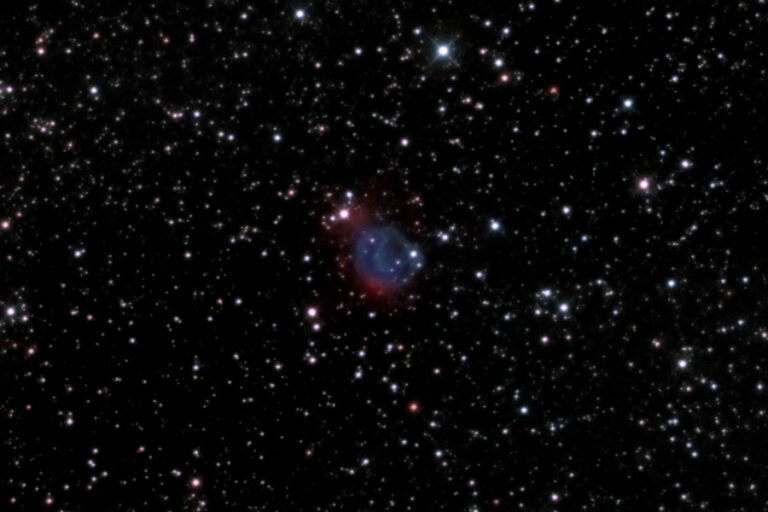
New Nebula Discovered in Taurus
Amateurs have found and visually confirmed a planetary nebula, St-Dr-1.
This Week's Sky at a Glance, May 8 – 16
Pollux and Castor form the top of the enormous Arch of Spring. To their lower left is Procyon, the left end of the Arch. Farther to their lower right is the other end, formed by Menkalinan (Beta Aurigae) and then brilliant Capella.

Comet SWAN Expected to Put on a Splendid Show
Comet SWAN will grace northern skies in the days to come.

The Big Dipper: Hop to Spring's Sky Sights
The Big Dipper is one of the most familiar sights in the Northern Hemisphere’s night skies. You can use its stars to locate other fun targets.

May 2020: Venus & Mercury at Dusk
Would you like to learn your way around the night sky in just 10 minutes? This month's Sky Tour astronomy podcast helps you to navigate all across the late-spring sky like a stargazing veteran. No experience or equipment needed!
This Week's Sky at a Glance, May 1 – 9
Look high in the west for Pollux and Castor, the heads of the Gemini twins. They form the top of the enormous Arch of Spring. To their lower left is Procyon, the left end of the Arch. Farther to their lower right is brilliant Capella.
This Week's Sky at a Glance, April 24 – May 2
Astronomy is an outdoor nature hobby. For an easy-to-use constellation guide covering the whole evening sky, use the big monthly map in the center of Sky & Telescope magazine.

Chase a Potentially Hazardous Asteroid As It Flies by Earth
Break out your binoculars or a small telescope, we've got a busy week ahead! Watch as a bright asteroid approaches Earth, the Moon steals a star, and Comet ATLAS's last hurrah.
