 SUNSET:


Hubble Boosts Case for Exomoon
Exoplanet Kepler-1625b might harbor a moon the size of Neptune—potentially the first confirmed exomoon—but researchers urge caution.

The Outer Planets Move In, plus an "Old Moon" Observing Challenge
As the bright planets march westward, Uranus and Neptune become the fresh new faces of fall. And if you've never seen an ultra-thin lunar crescent, here's your chance.
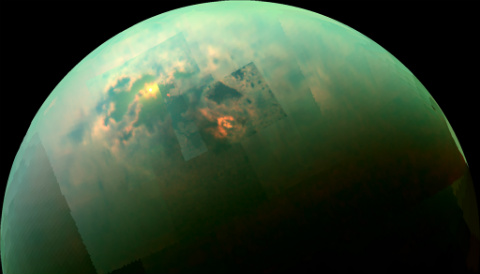
Titan Dust Storms Pose Challenges for Future Spacecraft
Future missions to Saturn's moon Titan may have to contend with blowing particles and higher-than-expected winds from recently discovered dust storms.

New Object Found in Far Outer Solar System
Astronomers have discovered a object—2015 TG387—that could help in the hunt for a hypothesized Planet Nine in the distant reaches of the solar system.

A New Look at the Solar Corona
The hot, tenuous solar corona is visible during a total solar eclipse, and astronomers have long studied the structure and dynamics of the ghostly coronal streamers. Now, a special observing campaign has allowed us to see the corona in unprecedented detail.

60-Second Astro News: Dust Storms on Titan, Origin of Phobos
In astronomy news this week: Dust storms are seen blowing around Titan for the first time, and new clues from old data suggest that an impact on Mars gave birth to Phobos.

Students Shine at 2018 Astronomical League Youth Awards
Expanding planetary nebulae, X-rays from supermassive black holes, and stellar community involvement were all on display at the youth awards presented at this year’s Astronomical League convention.
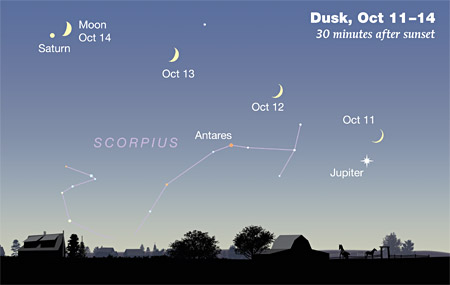
Tour October's Sky: Jupiter, Saturn & Mars
Download this month's astronomy podcast to get "when and where" guidance on finding bright planets, evening constellations, and meteors shed by Halley's Comet.

'Oumuamua’s Story Keeps Spinning
Two new studies question the cometary nature of 'Oumuamua, our first interstellar visitor, and where in the Galaxy it might have come from.

Surprise Discovery of a 14-Year-Old Supernova
Much of today’s astronomy happens via methodical searches, but sometimes serendipitous discoveries still surprise us. Such is the case with the transient CGS2004A, a possible supernova recently detected in a galaxy nearly 50 million light-years away.

Touchdown: Hayabusa 2 Deploys Rovers to Explore Ryugu
The Japanese Hayabusa 2 spacecraft dispatched the first of a set of smaller missions that will explore asteroid 162173 Ryugu.

The Magellanic Clouds Might Once Have Been a Trio
The Milky Way's two largest companion galaxies may have once been a threesome — but new data from the Gaia satellite leaves the satellites' history an open question.

60-Second Astro News: TESS's First Exoplanet, Asteroid Hides a Galaxy
TESS finds its first exoplanet — a super-Earth around bright nearby star Pi Mensae — and astronomers watched an asteroid hide a galaxy to get the details on the asteroid's size, shape, and orbit.

Pattern in Milky Way's Stars Suggests Recent Galactic Whack
An unexpected pattern in the Milky Way's disk of stars points to a recent whack from another galaxy.
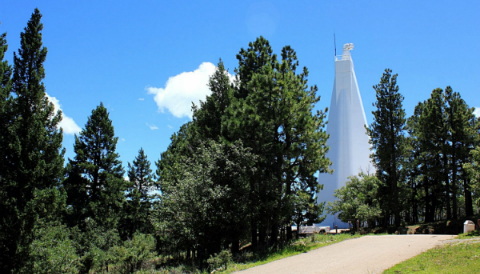
Sunspot Solar Observatory Reopens After Mysterious Shutdown
After a 10-day lockdown to cooperate with a criminal investigation, Sunspot Solar Observatory is back to looking at the Sun.

Dawn Probes Role of Cryovolcanism on Ceres
A recent analysis of data from NASA's Dawn spacecraft reveals the role of cryovolcanism past — and likely present — on the giant asteroid Ceres.

Super-Earth Discovered in (Fictional) Vulcan System
Thirty years ago, Gene Roddenberry, of Star Trek fame, and three astronomers made the case that the orange-hued star 40 Eridani A ought to host Vulcan, Mr. Spock's home. Now, a robotic survey has discovered a planet around that very star.
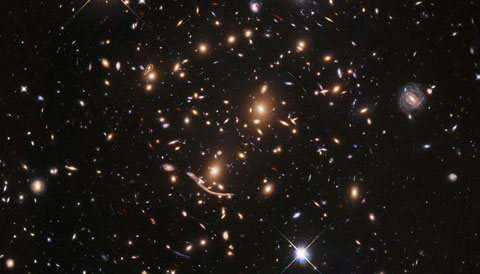
60-Second Astro News: Starbirth, Stardeath, and the Evolution of Galaxies
Starbirth and stardeath light up a nearby galaxy while faraway galaxies twist and bend in these new images from NASA's Hubble and Chandra space observatories.
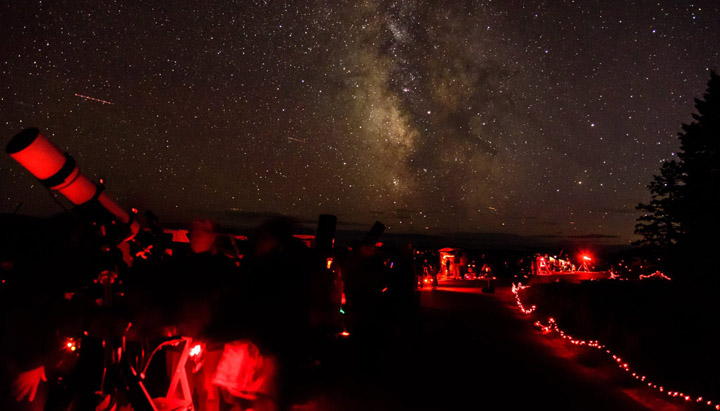
Stars Shine Brightly for Acadia Night Sky Festival
Last weekend the 10th edition of what has become a major stargazing event drew thousands of visitors to Mount Desert Island in Maine.

Seen at Last: A Superfast Jet Streams Away from Neutron-star Smashup
A new finding suggests that LIGO’s neutron-star merger was a typical gamma-ray burst after all.
