SUNSET:


The Stellar Magnitude System
Why do larger numbers mean less light? Here's the story of astronomy's odd but beloved scheme for describing star brightnesses.

Tips for Using Your "Go To" Scope
Tips to ensure trouble-free slewing for Go To telescopes

Four Infamous Telescope Myths
Here are some plausible-sounding ideas that turn out to be less than true.

Binoculars: Halfway to a Telescope
All you need to enjoy the wonders of the night sky is a pair of binoculars.
The Setting Circles on Your Telescope
Beginners should ignore them and learn to navigate the sky by eyeball instead. However, setting circles do have their uses -- if you make all the right adjustments first.

Using a Naked-Eye Star Map
Just a couple hours spent learning to read a star map can open up the heavens for a lifetime of exploration.

A Simple Home Observatory in Your Backyard
Size can be deceptive; this small home observatory is remarkably practical.
How I Beat Light Pollution in My Hometown
You don't have to fight city hall. To ban bad lights, make city hall your friend.

Names of Deep-Sky Objects
Expert observer Brian Skiff explains NGC, UGC, and everything in between.

How to Care for Your Telescope Optics the Right Way
The mirror in your telescope will probably work fine with a bit of dust on it, but if it's really dirty, you may want to clean it — carefully!

How far away are the stars I see through my telescope?
The faintest stars I can see in my 4-inch refractor are 12th magnitude. If one of these stars is just like the Sun, how far away is it? The Sun would be magnitude 12.0 if it were 880 light-years away. That’s not very far in the grand scheme of the…

What is a Sundog, and How Did "Sundogs" Get Their Name?
Why are "sundogs" called by that name? Bob Johnson / SkyandTelescope.com Photo Gallery Before answering the why question, let me answer the what question that comes before: namely, what is a sundog, or mock Sun, in the first place? A sundog is a concentrated patch of sunlight occasionally seen about…
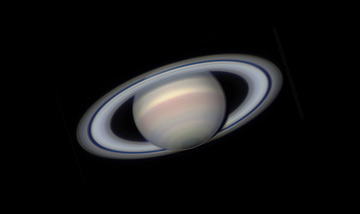
Why do the outer, gas-giant planets rotate faster than the inner, terrestrial planets?
Why do the outer, gas-giant planets generally rotate much faster than the inner, terrestrial planets? The reasons why some planets rotate as quickly as they do remain puzzling to planetary scientists. Most studies in this area have focused on the inner planets. Earth and Mars, which accumulated gradually from rocky…

Is it possible to detect Jupiter's satellites with the unaided eye?
I’ve heard it might be possible to detect Jupiter’s satellites with the unaided eye if Callisto and Ganymede appear together when Ganymede is at greatest elongation from Jupiter. Will this happen anytime soon? Jupiter is now setting soon after sunset. But three times in 2008, Texans (and North Americans generally)…

Star Names: Where Do They Come From and What Do They Mean?
Confused by the bizarre names that astronomers have given the stars? Here's where they come from and what they mean.

Is obstruction of less consequence for photography than for visual observing?
Some of the best images of planets are taken with Schmidt-Cassegrain telescopes, yet people often say that the large central obstruction makes this design ill-suited for planetary observing. Is the obstruction of less consequence for photography than for visual observing? Do CCDs and digital cameras make the central obstruction less…

Why doesn't S&T produce a star atlas with mirror-image charts?
Why don’t you produce a star atlas with mirror-image charts? It would be of immense value to the many observers who use a star diagonal on their telescopes. It’s a great idea in theory, but not in practice. Here’s why: · economics. Printing two versions of an atlas would double…

How can a telescope have an f/ratio of f/42?
I was amazed at Jim Melka’s beautiful picture of Mars on page 136 of the January 2006 issue but puzzled by the caption, which said that he used a 12-inch reflector at f/42. How is this possible? Knowing that a telescope’s f/ratio is its focal length divided by its aperture,…

Will all eight planets ever line up on the same side of the Sun?
Will there ever be a moment when all eight major planets are in a straight line on the same side of the Sun? Jean Meeus addresses this in Mathematical Astronomy Morsels (Willmann-Bell, 1997). He points out that you have to start by defining the question precisely. Let’s reduce the problem…

Is it true that Andromeda Galaxy is moving toward us?
Is it true that the Andromeda Galaxy is blueshifted and moving toward us? How can this happen in an expanding universe? The Andromeda Galaxy (M31) is indeed approaching us, by about 300 kilometers (190 miles) per second measured with respect to the Sun. If you subtract the Sun’s orbital motion…