 SUNSET:


Thirty Meter Telescope Set to Begin Construction
Hawaiian Governor David Ige and the Thirty Meter Telescope International Observatory have announced that construction of the Thirty Meter Telescope will begin the week of July 15th.

Happy Birthday, Lowell Observatory!
One of the nation's most famous observatories turns 125 years old. Let's all wish it a Happy Birthday!

Gravitational-wave Detectors Come Online, Find Possible Black Hole-Neutron Star Crash
Only a month into a new observing run, gravitational-wave observatories have announced five new signals — one of which could turn out to be a black hole swallowing a neutron star.

New Astro Camera Spots Thousands of Celestial Flare-ups
A vision from 70 years ago, the Zwicky Transient Facility has produced a wave of discoveries — but it’s only a hint of what’s to come.
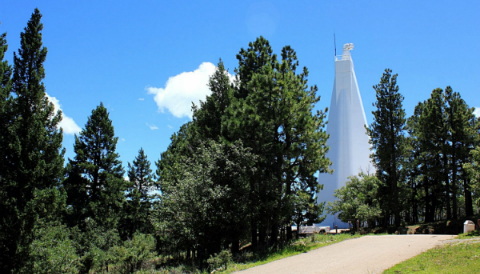
Sunspot Solar Observatory Reopens After Mysterious Shutdown
After a 10-day lockdown to cooperate with a criminal investigation, Sunspot Solar Observatory is back to looking at the Sun.

Arecibo Observatory Emerges from Storm with $6M Upgrade
The famed Arecibo Observatory has faced down several funding challenges in recent years, and a hurricane to boot, but now a new project is making the radio dish more relevant to astronomy than ever.
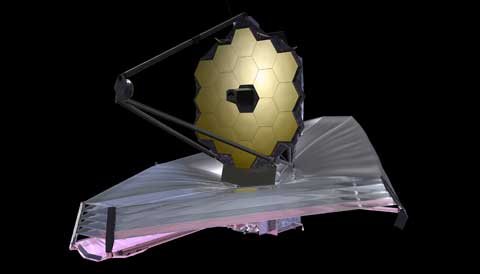
NASA Sets March 2021 Launch Date for James Webb Space Telescope
Despite significant cost overruns, NASA's James Webb Space Telescope is now set for a March 2021 launch — assuming it receives Congressional reauthorization.
James Webb Telescope Delayed Until 2020
NASA officials announced Wednesday that the James Webb Space Telescope launch would be delayed until approximately May 2020. But before the mission can launch, its managers may have to face Congress.
James Webb Space Telescope: Additional Delays "Likely"
A non-partisan government office has issued a report warning of additional delays for the James Webb Space Telescope, which could pit the mission against its funding cap.

60-Second Astro News: Merging Black Holes, Distant Super-Supernova, and Arecibo's Fate
Supermassive black holes en route to merger have strange dynamics in their gas disks. Astronomers have spotted the most distant spectroscopically confirmed supernova. And NSF decides the fate of the Arecibo Observatory.
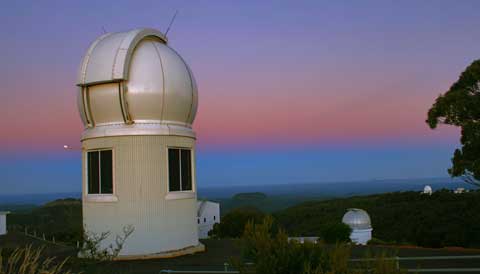
Explore The Southern Sky with SkyMapper
A new telescope called the SkyMapper has charted stars and galaxies across the southern sky, producing a map called "the best ever created."

Arecibo Observatory Weathers Funding Uncertainty
The U.S. National Science Foundation will continue to fund the iconic radio dish, though at a much-reduced level, as it seeks partners to share in the facility's operation.

Sky-sweeping Telescope Sees First Light
The Zwicky Transient Facility has taken its first image, covering an area equivalent to 247 full Moons in a single shot. This beginning is part of an ongoing sea change in astronomy.

New High-End Search for Lunar Impacts
A professional observatory in Greece has begun recording flashes created when bits of interplanetary debris strike the Moon.
James Webb Space Telescope Launch Delayed til 2019
The long-awaited James Webb Space Telescope — the successor to the Hubble Space Telescope — has slipped its launch date by several months. It will now launch between March and June 2019.
Hawai'i Gives Go-Ahead to Thirty Meter Telescope
After protests and a judge's ruling brought the colossal Thirty Meter Telescope project to a halt, a state panel has cleared the way for its construction atop Mauna Kea to proceed.

Some Damage to Arecibo Observatory; Stormy Times Ahead
Arecibo and its team rode out the largest storm in its history, but it's unclear what the moderate damage will mean for the radio observatory's future.

Iconic Radio Telescope Begins 7-year Search for New Objects
A new survey promises the most complete map of radio-emitting celestial sources ever made. It will reveal thousands of new objects after seven years of observation.

Arecibo Observatory Faces Uncertain Future
Arecibo Observatory, the world's largest single-dish active radar telescope in the world, may be shut down or even destroyed due to funding concerns.

Green Bank Observatory Goes Independent
Green Bank is celebrating its 60th birthday by seceding from the National Radio Astronomy Observatory.
