 SUNSET:

One Supernova, Many Camera Angles
"Light echoes" off dust clouds far from an old supernova are still providing replays of the explosion — as seen from different directions. They show that the explosion was asymmetric.
Asteroid To Hide Naked-Eye Star
For anyone in a 25-mile-wide path right across Los Angeles, a bright star in Ophiuchus will wink off for several seconds in the predawn hours of April 6, 2010.
New Comet Machholz
California's comet-hunting veteran Don Machholz bagged his 11th discovery on March 23 and 26, 2010. It's a faint diffuse comet, low in the morning sky.

Nova in Eridanus
Japanese amateur Koichi Itagaki, of recent comet fame, has just discovered a nova near Rigel on November 25, 2009.
Citizen Science: Projects & Collaboration
Citizen Sky Wants You!
Backyard astronomers of all types and experience levels can participate in a real-world science project — and help solve a mystery involving the star Epsilon Aurigae that's puzzled astronomers since 1821.

U.S. Physicians Join Light-Pollution Fight
Thanks to a full-court press by a cardiologist with a passion for astronomy, the American Medical Association has taken a stance in the fight to make outdoor lighting more benign to humans — and to the stars above.
New York Teen Finds Wimpiest Supernova
On November 7, 2008, 14-year-old Caroline Moore of Warwick, New York, discovered a supernova in the galaxy UGC 12682, making her the youngest person ever to find an exploding star.
New Circumpolar Comet Yi-SWAN
On March 26, 2009, Korean amateur Dae-am Yi caught the small, greenish glow of a new comet with his Canon camera.
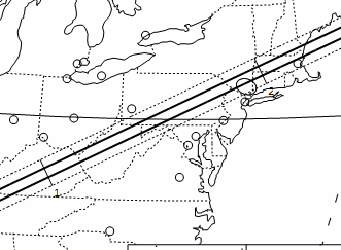
Asteroid to Occult Star on Morning of Friday, Jan. 9
On the morning of Friday, Jan. 9, from 10:55 to 11:06 UT, asteroid 1963 Bezovec occults the 8.3-magnitude star HIP 64220 in a narrow path from Baja California through Texas to New England and Nova Scotia.
Rare Eclipse of EE Cephei Is Set to Begin
During January 2009 a faint star in Cepheus will fade, as it does every five or six years, when "something" goes in front of it.

Rate Your Skyglow
Light pollution is most amateur astronomers' worst enemy. Learn here how to measure and describe how brightly your sky glows.

Rock from Space to Burn Up over Africa
Late Monday night, October 6-7, 2008, a tiny asteroid will enter Earth's atmosphere over Sudan, creating a spectacular explosion in the night sky.
Possible Fireball Outburst Sept 9-10
An unexpected meteor burst was detected on the night of September 8-9. Bill Cooke of the Marshall Space Flight Center is urging meteor watchers to see if the activity continues on the night of September 9-10.
Perseids Hitting the Moon
Amateurs have helped lead the way in recording the flashes of meteoroids hitting the Moon's night side.
Jupiter's Third Red Spot May Have Survived
Jupiter's newest red spot was disrupted during its encounter with the Great Red Spot and Oval BA, but appears to be reforming.
Comet Boattini Brightens
During May and June 2008, this visitor may be dimly visible without a telescope — but only if you live in the Southern Hemisphere.
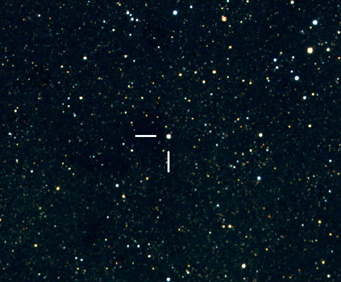
Another Bright Nova, This Time in Sagittarius
Just magnitude 9 when discovered on April 18, 2008, this nova in Sagittarius has brightened tenfold.

Found in Cygnus: A 7th-Magnitude Nova
Two Japanese amateurs captured the new star on April 10, 2008, at a spot where their camera had recorded nothing just three days earlier.
A Triple Occultation by Eugenia and Its Moons
On March 8, 2008, this asteroid or one of its two moons could make a faint naked-eye star vanish briefly from the sky.
S&T's Star-count Challenge!
How bad is the light pollution where you live? How many stars can you see on a dark night? Last year the GLOBE at Night project tallied 8,500 star-counting estimates from around the world. That's great — but we can do better! All it'll take is 30 minutes and a clear evening between now and March 8th.
