 SUNSET:


Black Holes Tango in Distant Galaxy
A bizarre X-ray flare first spotted in 2010 could be a signal from two black holes that will ultimately unite into a single beast.

Eta Aquariid Meteors in 2014
Seen each year in early May, the Eta Aquariid meteors are spawned by none other than Halley's Comet. This shower is best seen before dawn's first light.

How to See Saturn at Its Best
The rings were tilted 15° on February 7, 2012, when Robert English in Kentucky took this fine image using a 20-inch Newtonian reflector. Saturn is entering the early evening sky this spring just as Jupiter begins its exit in the west. Here's a quick guide to spotting the ringed planet…

Hidden Treasures in Hubble Images
A new processing technique has revealed once-invisible planetary disks encircling five stars imaged in Hubble’s archive.

Exoplanet Out for a Quick Spin
Astronomers have used a new technique to measure — for the first time — the spin of an extrasolar planet.
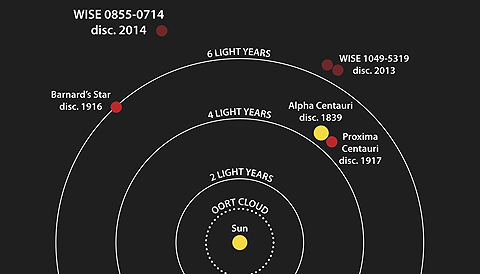
Meet the Sun's Chilly New Neighbor
Infrared observations have uncovered a cool brown dwarf that’s only about 7 light-years away. The object is one of the closest stellar systems to the Sun and the coolest brown dwarf yet discovered.
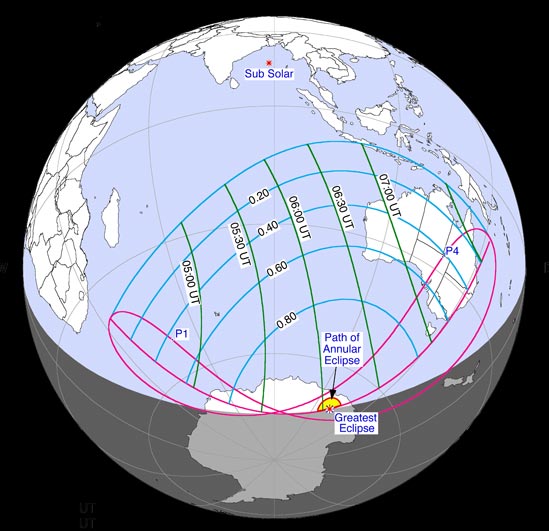
April 29th's "No Show" Annular Solar Eclipse
The first and only annular solar eclipse of 2014 has a path that just clips Antarctica, at a location so remote that no one on Earth will get to see the event. Update: Partial phases of April 29th's solar eclipse were widely seen across the southern part of Australia. See…

Pro-Am Collaboration Yields Stunning Images
Amateur astronomers have teamed up with the pros to produce four stunning multiwavelength images of galaxies M101, M81, M51, and Centaurus A.

Tour May's Sky: Evening Planets Align
This month you have a chance to spot four planets in the evening sky at once: Mercury, Mars, Jupiter, and Saturn. As a bonus, you might be treated to a spectacular display of meteors on the morning of May 24th.

Jupiter's Not-So-Great Red Spot
Astronomers don't know why Jupiter's iconic Great Red Spot has been gradually shrinking since the 1800s — or why the downsizing has accelerated during the past two years. Update: On May 15th, NASA released newly taken images of the Great Red Spot (at bottom below) to show its declining size…

Mysteriously Bright Supernova Explained
In 2010, a mysteriously bright supernova appeared, later sparking a debate within the astronomy community. But new images of the now-faded supernova reveal an intervening — and until now invisible — cosmic lens, which magnified its light.

Planets’ Wacky Orbits Solved
By combining nearly 1,500 observations with sophisticated computer models, astronomers have shed light on a nearby planetary system, proving that the planets' bizarre orbits will actually remain stable for the next 100 million years.
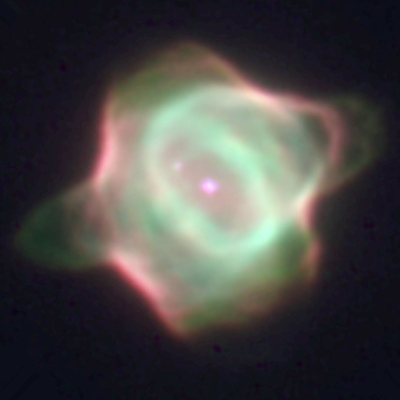
Watch a Star Evolve in “Real Time”
The odd behavior of a star in the heart of the Stingray Nebula provides tantalizing evidence that we may be seeing, first-hand, its helium-shell flash: an explosive phase of nuclear burning at the end of a star’s life.

Opportunity Rover Gets a Cleaning
The Mars rover Opportunity has been cleaned of heavy dust coating its solar panels, thanks to some strong winds blowing over the rim of Endeavour Crater.

Most “Earth-Like” Planet Found Yet
The newly discovered planet, Kepler-186f, is the first Earth-size exoplanet circling in its star’s habitable zone. The media worldwide is gleaming with fantastical headlines, but readers in the know may have an inkling the result is less than it seems.

Telescopes: Guides & Recommendations
What to Know Before Buying a Telescope
Looking through a telescope introduces you to a whole new world of unexpected wonders. But telescopes come in a huge range of sizes and shapes. Here's a detailed, printable guide to the essential features that every good scope needs to have.

Last Month for SkyWeek TV
April 2014 will be the last month covered by Sky & Telescope's wildly popular SkyWeek TV show.

Drama at Saturn: The Birth (or Demise) of a Moonlet?
New images from NASA’s Cassini mission show bright spots along Saturn’s A ring, likely caused by a small moonlet in the process of forming or shattering.

Record Crowds and Hot Products at Northeast Astronomy Forum
Sky & Telescope editors and staff made our annual pilgrimage to the astronomy expo to meet with our readers and get the scoop on the bevy of new products unleashed this year.

Supernova Remnant in Technicolor
Take a look at this supernova remnant from radio waves to x-rays to see multiple features of its bubble-like expanding shock wave. Supernovae — the dramatic explosions of massive stars ending their lives — can outshine their host galaxies for weeks, allowing them to be seen across millions of light-years…
