21–40 of 548 results
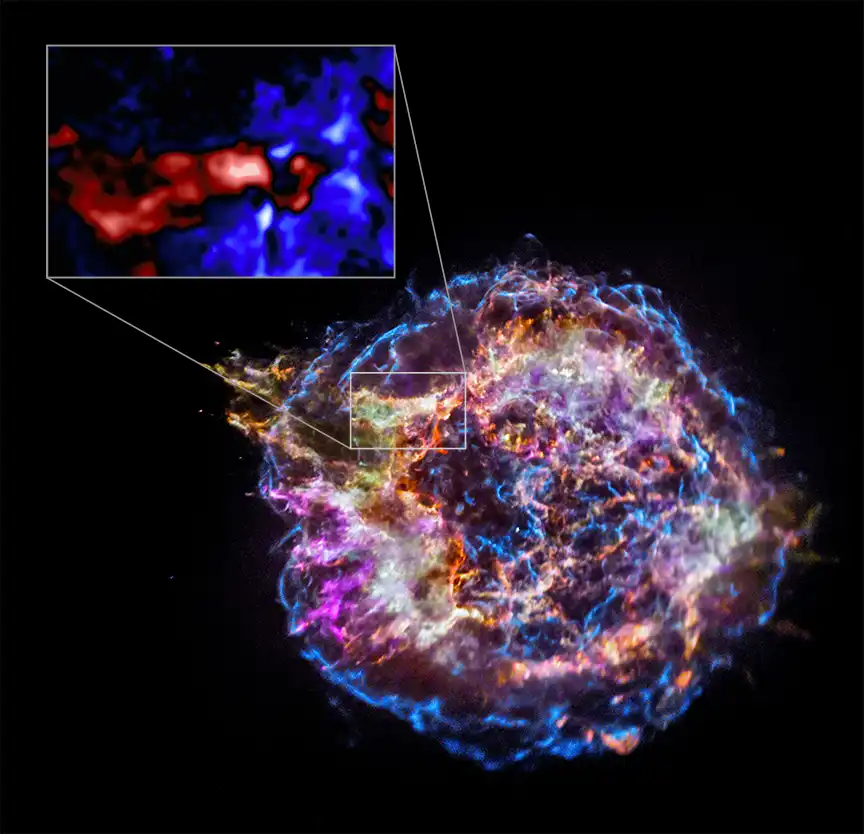
This release features a composite image of Cassiopeia A, a donut-shaped supernova remnant located about 11,000 light-years from Earth. Included in the image is an inset closeup, which highlights a region with relative abundances of silicon and neon. Over three hundred years ago, Cassiopeia A, or Cas A, was a star on the brink of self-destruction. In composition it resembled an onion with layers rich in different elements such as hydrogen, helium, carbon, silicon, sulfur, calcium, and neon, wrapped around an iron core. When that iron core grew beyond a certain mass, the star could no longer support its own weight. The outer layers fell into the collapsing core, then rebounded as a supernova. This explosion created the donut-like shape shown in the composite image. The shape is somewhat irregular, with the thinner quadrant of the donut to the upper left of the off-center hole. In the body of the donut, the remains of the star's elements create a mottled cloud of colors, marbled with red and blue veins. Here, sulfur is represented by yellow, calcium by green, and iron by purple. The red veins are silicon, and the blue veins, which also line the outer edge of the donut-shape, are the highest energy X-rays detected by Chandra and show the explosion's blast wave. The inset uses a different color code and highlights a colorful, mottled region at the thinner, upper left quadrant of Cas A. Here, rich pockets of silicon and neon are identified in the red and blue veins, respectively. New evidence from Chandra indicates that in the hours before the star's collapse, part of a silicon-rich layer traveled outwards, and broke into a neighboring neon-rich layer. This violent breakdown of layers created strong turbulent flows and may have promoted the development of the supernova's blast wave, facilitating the star's explosion. Additionally, upheaval in the interior of the star may have produced a lopsided explosion, resulting in the irregular shape, with an off-center hole (and a thinner bite of donut!) at our upper left.

Astronomy & Observing News

From the Sun to the Stars, Astronomy in Photos

New observations reveal turbulent flows in the supernova remnant Cassiopeia A and in the solar corona.
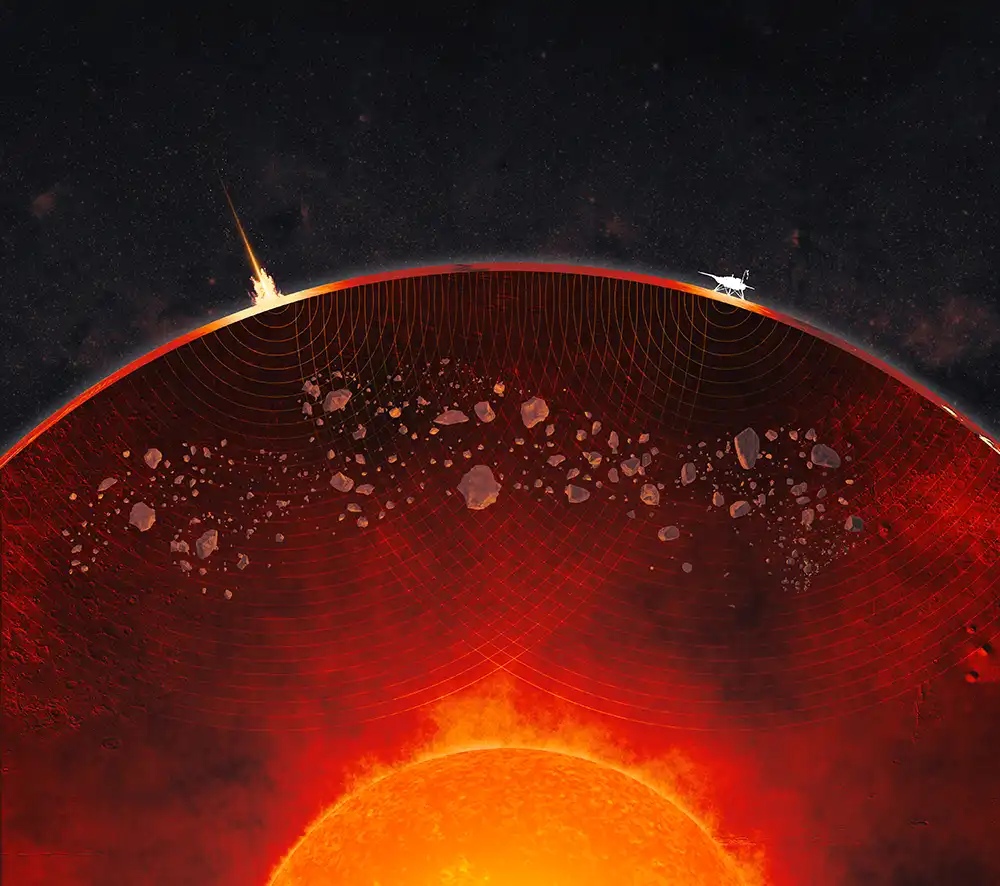
Lumpy Mars mantle

Astronomy & Observing News

Mars Might Have a Surprisingly Large, Solid Core, Marsquakes Reveal

Marsquakes reveal a lumpy, viscous mantle and a large, solid inner core, with profound implications for Mars past, present, and future.
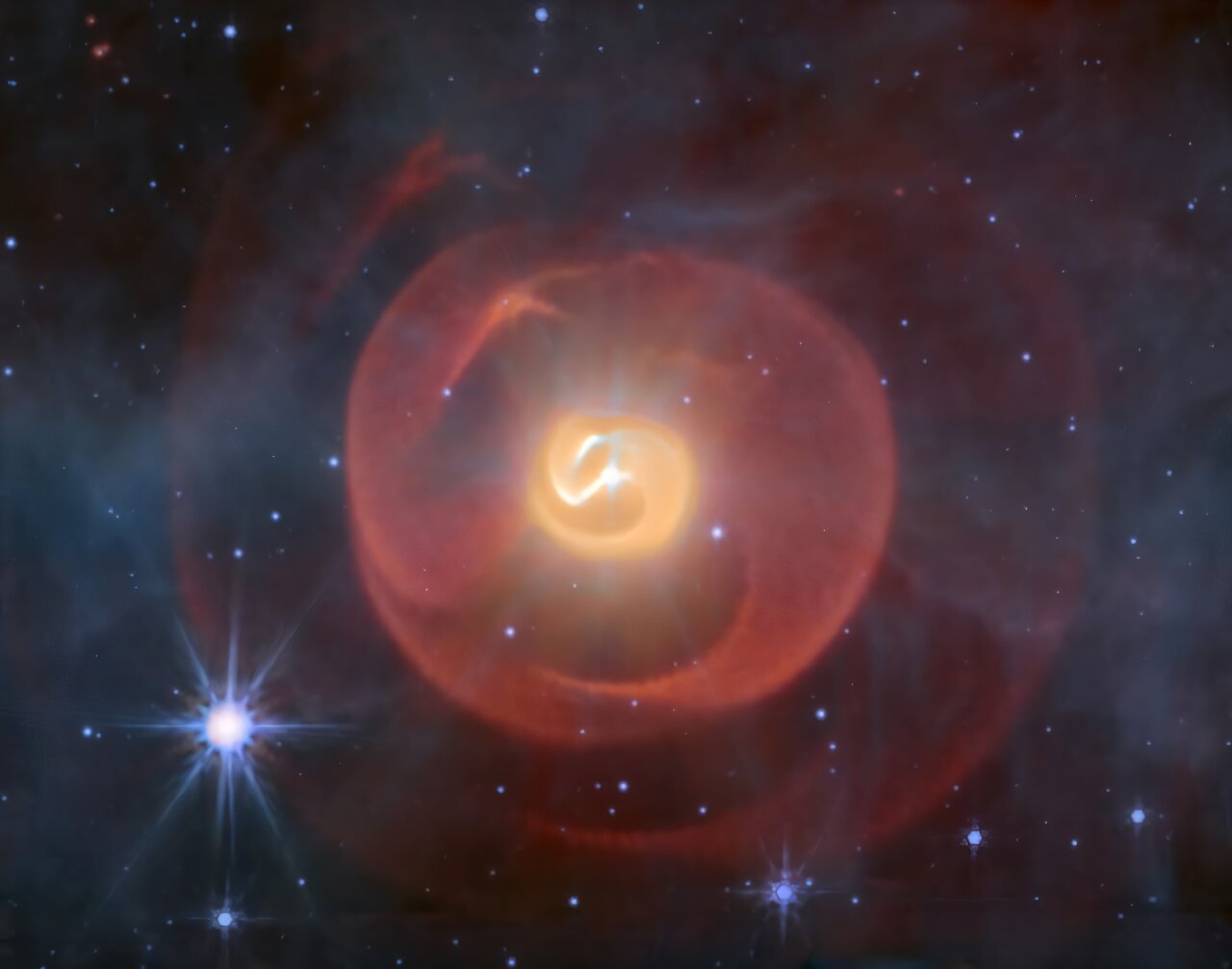
Apep Nebula

Astronomy & Observing News

The Serpentine Apep Nebula, Imaged by the Webb Telescope

The James Webb Space Telescope shows intriguing new details in the Apep Nebula, created by the colliding winds of two dying stars.
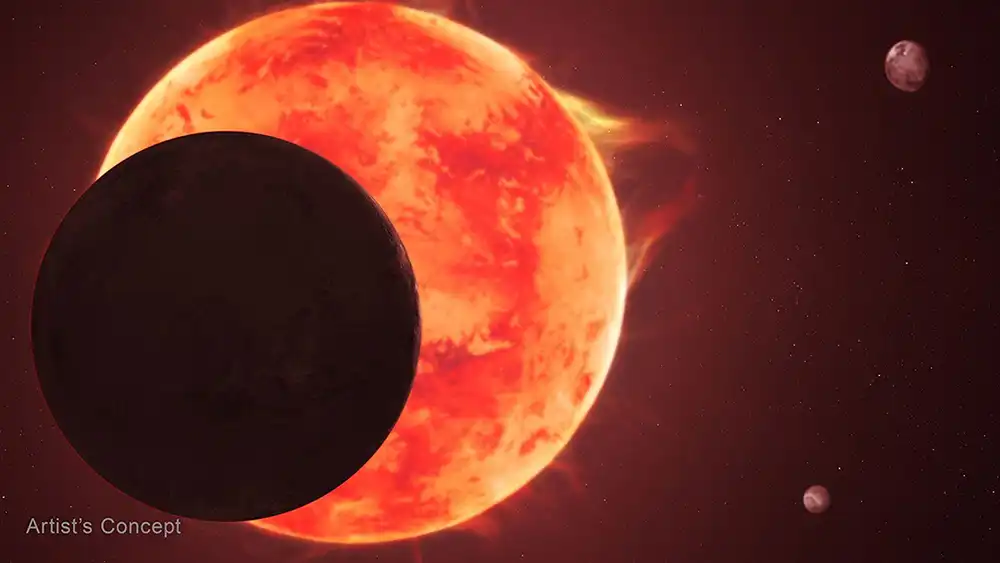
TRAPPIST-1d in silhouette in front of its parent star

Astronomy & Observing News

No Evidence for Atmosphere on Trappist-1d

New James Webb Space Telescope observations of the third world in the seven-planet TRAPPIST-1 system rule out a variety of atmospheres.

The image is a detailed and colourful visualisation of the cosmic web, which shows the large-scale structure of the Universe. The left side of the image is filled with blue and purple colours and is a bit wispier/darker. The right side has bright orange and yellow colours and is much bolder/brighter. In the centre, there is a bright green-blue area where these two sides meet, forming a complex network of filaments that connect various clusters of galaxies. The text ‘ILLUSTRIS’ appears in small font at the bottom right corner.

Astronomy & Observing News

Astronomers Map the Cosmic Web

A 23 million light-year-long gaseous filament and 39 bursts of radio waves are helping astronomers chart the universe's largest-scale structures.

Astronomy & Observing News

Never-Before-Seen Views of the Sun

New observatories in space and on the ground are providing us with our best views yet of the Sun — providing insight into puzzles that have remained unsolved for decades.

In the primary composite image of this release, the curious object is shown in the context of the supernova remnant and nearby gas clouds. Radio data is red and X-ray sources seen with Chandra are in dark blue. The supernova remnant is the large, wispy, red oval ring occupying the lower right of the image. The curious object sits inside this ring, to our right of center; a tiny purple speck in a sea of colorful specks. The gas cloud shows infrared data from NASA’s Spitzer Space Telescope and resembles a mottled green, teal blue, and golden orange cloud occupying our upper left half of the square image.

Astronomy & Observing News

Mystery Object in the Milky Way

Astronomers have found X-rays coming from a strange object that releases regular bursts of radio waves, shedding new light on what that object might be. 
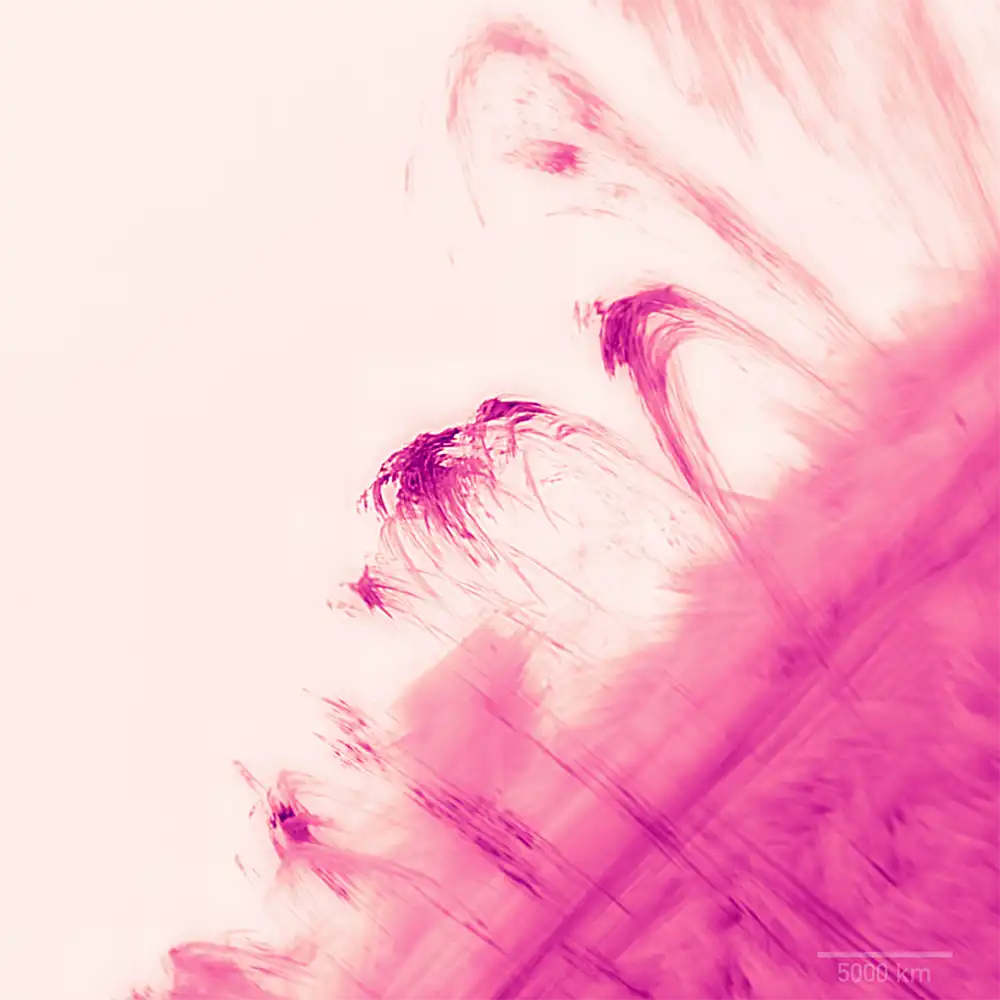
Image of solar plasma in pink

Astronomy & Observing News

Sharpest Images Yet of the Sun's Corona [VIDEOS]

New adaptive optics technology has resulted in the sharpest views yet of the solar corona.

Galaxy image

Astronomy & Observing News

Barred Spiral Galaxy Discovered in the Early Universe

The discovery of a barred spiral galaxy in a universe just a couple billion years old suggests that galaxies formed and evolved much more quickly than current theories suggest.
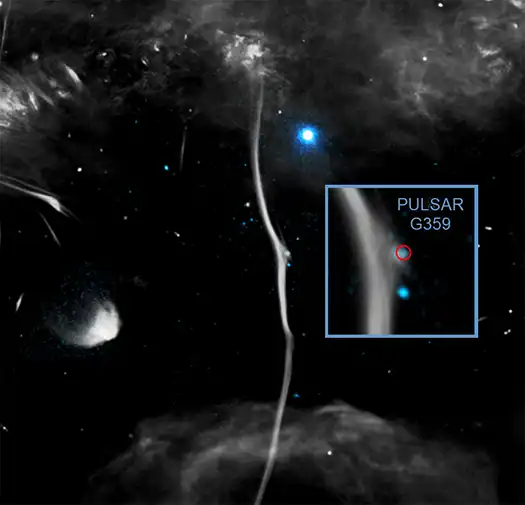
snaky filament with zoomed-in photo of a compact source near the filament shown in inset

Astronomy & Observing News

A Pulsar Broke a Magnetic Thread in the Milky Way

Mysterious threads dangle in the Milky Way center, and a pulsar has punched through one of them — providing fresh perspective on the threads' origins.
Astronomy & Observing News

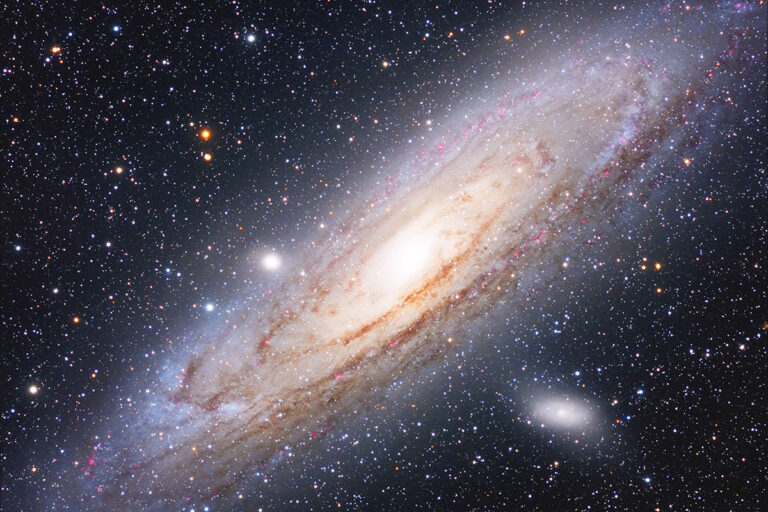
Why Are Most of Andromeda's Dwarf Galaxies On Our Side?

A new look at the galaxies swarming around the Andromeda Galaxy shows that their asymmetric arrangement is rare — and difficult to explain.
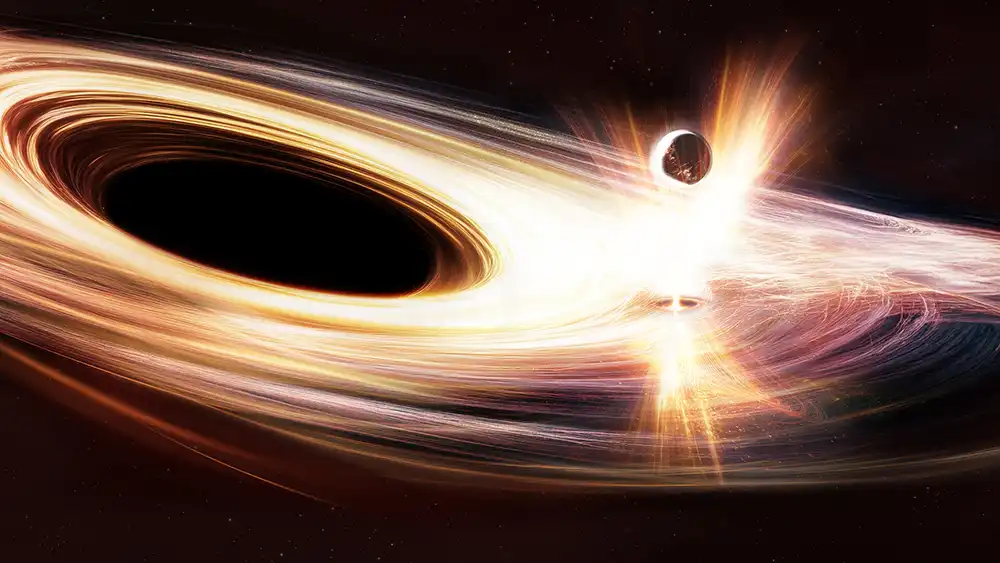
A bright disc of purplish, white and gold lines surrounds a black ellipse-shaped area, that looks like a hole in space. A ball of shining material pierces through the disc; an eruption of bright white-to-gold rays encircles the small hole in the disc provoked by the passage of the shining ball.

Astronomy & Observing News

Supermassive Black Hole Wakes Up

Regular bursts of high-energy X-rays might herald the birth of active galactic nuclei, the supermassive black holes in galaxy cores.

An iceberg reflects in serene bay waters in contrasting swooping and straight lines

Astronomy & Observing News

Sky & Telescope Goes to Greenland

Despite inopportune clouds, Sky & Telescope's first tour to Greenland offered unforgettable adventures with enormous icebergs, sled dogs, and more.

In the centre is an elliptical galaxy, seen as an oval-shaped glow around a small bright core. Around this is wrapped a broad band of light, appearing like a spiral galaxy stretched and warped into a ring, with bright blue lines drawn through it where the spiral arms have been stretched into circles. A few distant objects are visible around the ring on a black background.

Astronomy & Observing News

Astronomy in Pictures: From Cosmic Lenses to Dust Devils on Mars

Some cosmic perspective is a perfect cure for the Monday blues!

artist's concept of three-layered winds

Astronomy & Observing News

Window into Hot Jupiter Reveals Multilayered Winds

The hot, inflated atmosphere of Jupiter-mass planet WASP-121b undergoes surprising changes under the close heat of its star, new data reveal.

Star circles above white telescope dome

Astronomy & Observing News

Release of 4,000 Supernovae to Aid Cosmology

A new survey contains 3,628 Type Ia supernovae — the exploding white dwarfs that astronomers use as cosmological toeholds to gauge our expanding universe.

Viper rover art

Astronomy & Observing News

NASA Looks to Industry to Continue VIPER Lunar Rover Mission

The development of the VIPER lunar rover has been discontinued.

A three-part graphic showing observations of Wolf-Rayet 140, two massive stars with 17 dust shells around them. An inset appears at right, showing a portion of the two observations matched up to show that the arced dust has moved.

Astronomy & Observing News

Webb Telescope Watches Rippling Dust Shells

After more than a year in production, a new cosmic film, starring the massive star Wolf-Rayet 140, is out.

Astronomy & Observing News

Black Hole Sprouts Jets in Unprecedented Event

Astronomers have witnessed X-ray rumblings and a powerful plasma “burp” following a supermassive black hole’s meal.

Artist's illustration shows black hole surrounded by gas at right, with a white star incoming from the left

Astronomy & Observing News

Black Hole Eats One Star, the Remains Pummel a Second One

The crumbs of a supermassive black hole’s stellar meal has revealed the presence of a second star in a close orbit.

Advertisement