 SUNSET:

Catch Mercury at Its Best
Mercury is normally elusive, but it's putting on an extraordinarily good evening show for observers at mid-northern latitudes from late April through mid-May 2008.

Examining the Throat of a Black-Hole Jet
How do black holes squirt away jets of matter at nearly the speed of light? Now we know!
Polaris's Pulsations Pick Up
The North Star, slightly variable in brightness, continues to confound expectations.

Telescopes Galore at NEAF
Dozens of new products debut at the Northeast Astronomy Forum & Telescope Show.
Astro-imagers Share Keys to Success
The Northeast Astro-Imaging Conference (NEAIC) kicked off Thursday here in Suffern, NY., featuring talks by many of the biggest names in astrophotography.
Happy Birthday, Hubble!
Eighteen years ago today, astronauts aboard the Space Shuttle Discovery deployed the Hubble Space Telescope. And what an 18 years it's been!

Will Mercury Hit Earth Someday?
Here's the bad news: the inner solar system is unstable. Jupiter's gravity may send Mercury careening into the Earth. But don't start panicking yet.
NEAF is Back!
This weekend, make plans to attend the largest annual astronomy trade show in America: the Northeast Astronomy Forum & Telescope Show.

Fly with Apollo
Ride along on the Apollo space missions to the Moon with Imaginova's Starry Night Apollo.

Binocular SkyScout
See more celestial targets by attaching your Celestron SkyScout to tripod-mounted binoculars with the FAR-Sight SkyScout Mount from Farpoint Astronomical Research.
Big Autoguider
The affordably priced StarShoot AutoGuider from Orion Telescopes & Binoculars enables you to track your target precisely during long-exposure astrophotography.
Maglite Night Vision
Now you can make your Mini Maglite flashlight astronomy friendly with Nite Ize LED Upgrade kit.
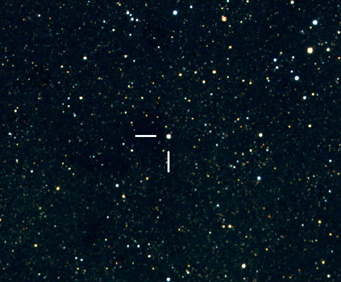
Another Bright Nova, This Time in Sagittarius
Just magnitude 9 when discovered on April 18, 2008, this nova in Sagittarius has brightened tenfold.

Hubble's Colliding Galaxies
No two galaxy collisions are alike, as shown in 59 weird images just released by the Hubble Heritage Project.
VISTA Survey Nears the Starting Line
A giant telescope with a deeply curved mirror is on its way to revolutionizing our view of the infrared sky.

GLAST Scientists Answer Your Questions
Earlier this week, key members of the Gamma-ray Large Area Space Telescope (GLAST) team were on hand to answer your questions about NASA's next space-based observatory. Read the conversation now.
The Sun Really Rocks!
Newly released video shows that the entire Sun shimmies and shakes in the aftermath of a big solar flare.

"Pioneer Anomaly" Solved?
The first spacecraft to reach the outer solar system have been mysteriously slowing down for decades. Put aside the exotic explanations; it may be just a matter of heat.
Apophis ad Absurdum
Was it a simple misunderstanding, sensationalist reporting, or an outright hoax? Whatever the answer, a recent story about a German student embarrassing NASA's asteroid experts shows how little mass-media reporters know about basic science — and how unlikely they are to check the facts.
Navigation Gathering
Stargazing's neglected cousin will be celebrated at a historical locale.
