 SUNSET:


Is Mercury a Hit-and-Run Survivor?
How did the the innermost planet get its huge iron core? New computer modeling suggests that Mercury is a lucky survivor of chaotic primordial smashups.

Super-close Pairing of Ceres and Vesta
Two bright asteroids now appear extremely close to one another in the evening sky. Here's how to spot them in binoculars or a small telescope.

Rosetta's Comet Sleeps Again
Comet 67P/Churyumov-Gerasimenko only woke briefly before starting another nap, expected on-again-off-again behavior that bodes well for the comet-chasing spacecraft's arrival in August 2014.

Titan Sheds Light on Alien Atmospheres
Saturn’s largest moon Titan played a cameo as an exoplanet, allowing astronomers to better understand how a thick layer of haze or clouds might affect their observations of more distant alien worlds.
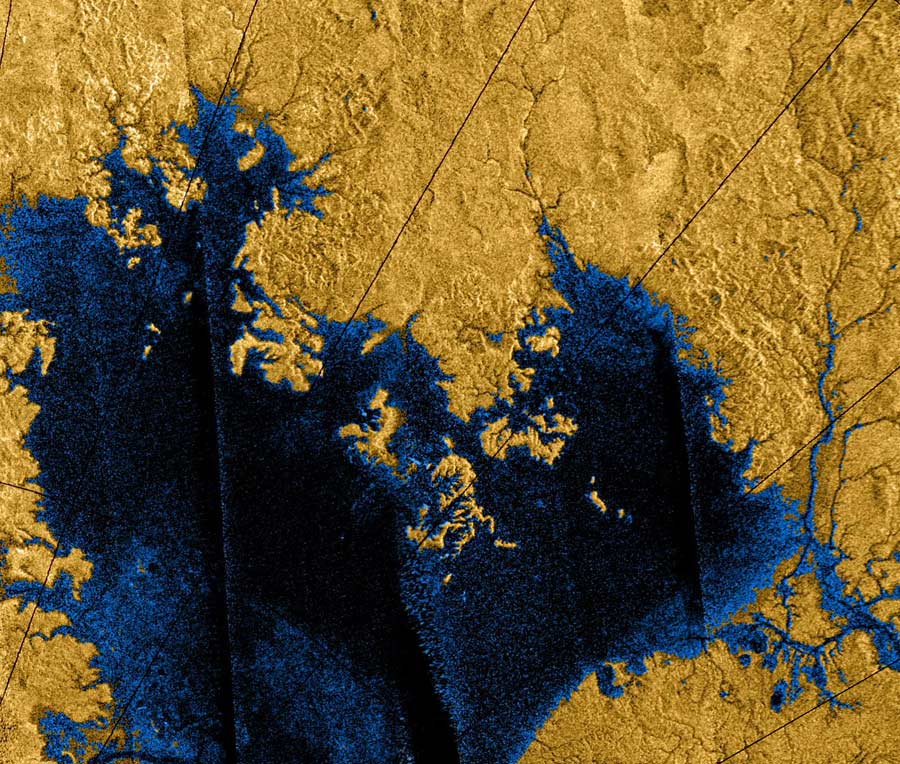
Sea Changes on Saturnian Moon
Fleeting radar features in a sea in Titan’s northern hemisphere are a tantalizing possibility of seasonal changes.

Three New Findings About the Moon
Researchers have announced interesting news concerning the Moon, especially about how and when it formed, and why the "Man in the Moon" constantly stares at us whenever the lunar disk is fully lit.
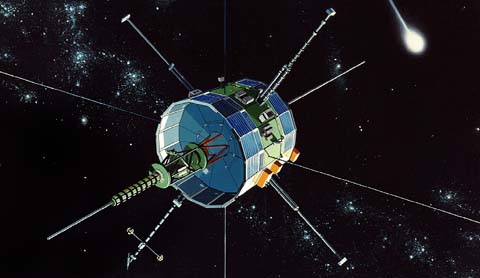
35-year-old ISEE 3 Craft Phones Home
Although its scientific work for NASA ended in the early 1980s, the International Sun-Earth Explorer never quite died — and this week it was revived by a team of volunteers intent on letting it continue exploring interplanetary space.
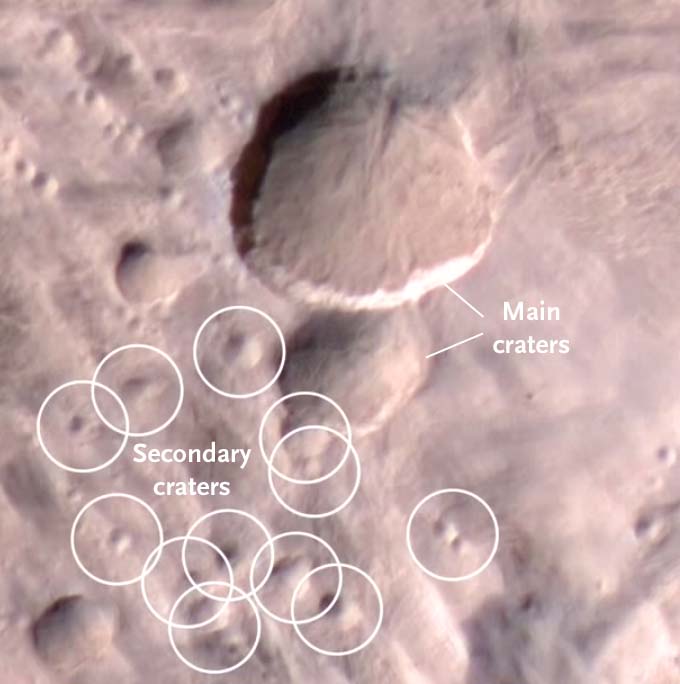
New, Intriguing Double Martian Crater
A small asteroid slammed into the Martian surface sometime between March 27 and 28, 2012, creating a crater swarm in the ground. The largest pit is 159 feet across.

Rosetta's Comet Awakens
The Rosetta spacecraft took these images of Comet Churyumov–Gerasimenko as it approaches the nucleus. It'll launch its lander, Philae, in November onto the nucleus's surface.

Drama at Saturn: The Birth (or Demise) of a Moonlet?
New images from NASA’s Cassini mission show bright spots along Saturn’s A ring, likely caused by a small moonlet in the process of forming or shattering.

An Asteroid to Rule Them All
Scientists have new insight into the damage caused by a Rhode Island–size asteroid that hit Earth more than 3 billion years ago, making the rock that wiped out the dinosaurs look like a lightweight.

LADEE Skims the Moon Before Crash
NASA has a fully functioning spacecraft orbiting the Moon, all science goals completed, and a lunar eclipse coming up. It's a perfect opportunity to make some risky but potentially rewarding swoops within 2 miles of the lunar surface.
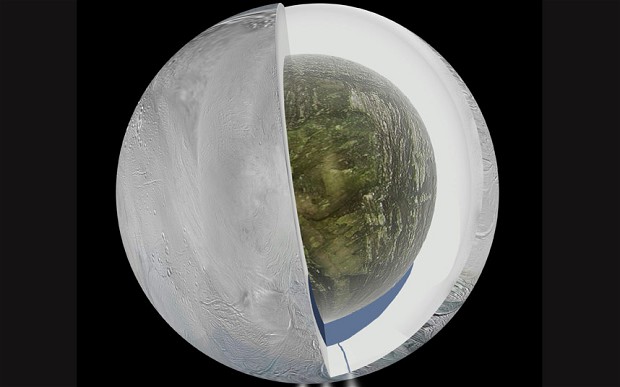
The Subsurface Ocean of Enceladus
Data from NASA’s Cassini spacecraft have provided further evidence that Saturn’s tiny moon Enceladus harbors a liquid ocean under its surface.

Rosetta Spots Its Comet
The European Space Agency’s comet-chasing spacecraft has imaged its destination for the first time since waking up from 957 days of hibernation.

Chariklo: An Asteroid with Rings
An international team of observers has made the surprising discovery that a distant asteroid has two distinct, dense rings.

New Object Offers Hint of "Planet X"
Astronomers have kicked around the idea of a distant "Planet X" for decades. But the recent discovery of 2012 VP<sub>113</sub>, located in an orbital "no man's land" roughly twice as far away as Pluto, has stoked the possibility that it really exists.
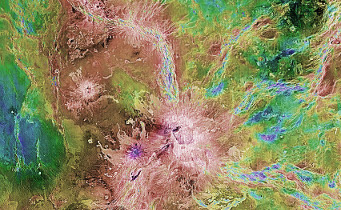
Active Volcanoes on Venus?
New images of Venus show features that look like hot spots, hinting there may be active volcanoes on the planet today.

Interactive Mosaic of Moon's North Pole
With the first interactive lunar north pole mosaic released by the NASA’s Lunar Reconnaissance Orbiter Camera team you can explore an area of the Moon’s northern hemisphere about the size of Alaska and Texas combined.

The Incredible, Shrinking Mercury
Now that they've seen all of the innermost planet up close, geologists realize that Mercury's crust buckled and fractured as the planet cooled and shrank far more than previously measured.

Source Crater for Martian Meteorites?
A team of European researchers believe that a big, fresh-looking crater on Mars is the likely launch pad for many of the Martian meteorites found on Earth.
