 SUNSET:


This Week's Sky at a Glance, May 2 – 11
In the evening sky, the Moon meets Mars meeting the Beehive. Low the dawn, Venus and Saturn contrast enormously in a telescope.
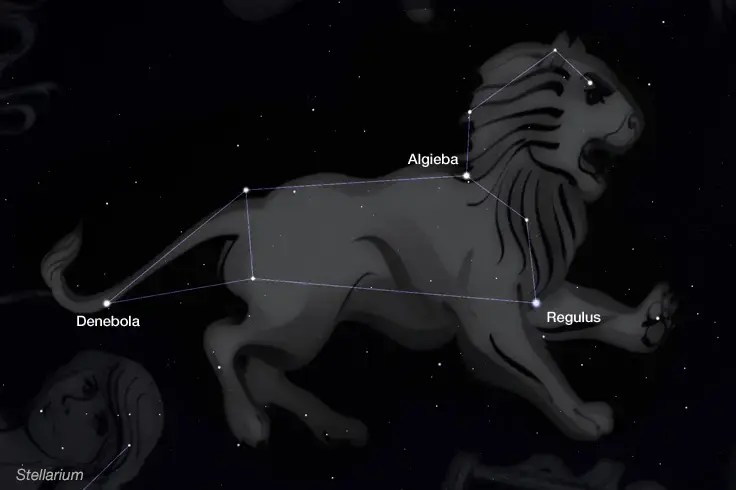
May Podcast: What to Call a Star?
This month we’ll look for tiny bits of Halley’s Comet; track down four planets; take stock of bright stars in the late-spring sky; and use the constellation Leo to learn what astronomers call all the stars that don’t have names. So grab your curiosity, and come along on this month’s Sky Tour episode.
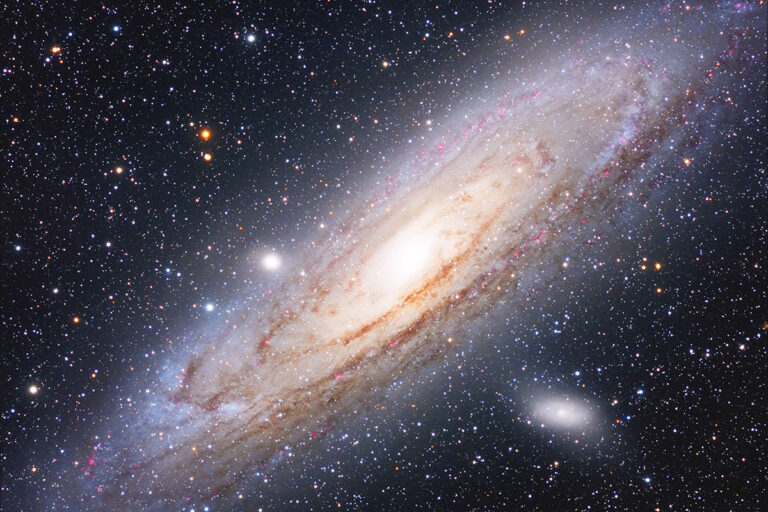
Why Are Most of Andromeda's Dwarf Galaxies On Our Side?
A new look at the galaxies swarming around the Andromeda Galaxy shows that their asymmetric arrangement is rare — and difficult to explain.
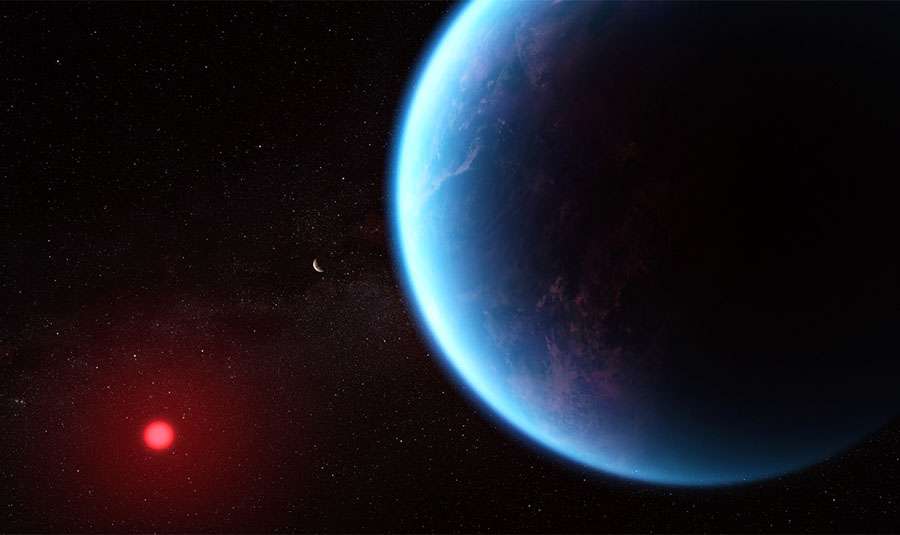
See the Host Sun of Exoplanet K2-18b
While you won't see a trace of this exoplanet or alien life, it's easy to spot the red dwarf star that warms its surface.

41,000 Years Ago, Auroras Appeared Across the Globe
A weakened geomagnetic field left Earth almost defenseless against harmful cosmic radiation 41,000 years ago, but that didn’t stop humans from thriving.

Vera Rubin Observatory: Astronomy’s New Workhorse
In February 2025, Sky & Telescope contributing editor Govert Schilling visited three new astronomical observatories in northern Chile. This is the second of a three-part blog series.

This Week's Sky at a Glance, April 25 – May 4
The Moon passes Mars when Mars passes the Beehive. Sirius, the Winter Star, sinks away in the southwest. Arcturus, the Spring Star, shines high toward the southeast. Vega, the Summer Star, is already nosing up in the northeast. All at once.
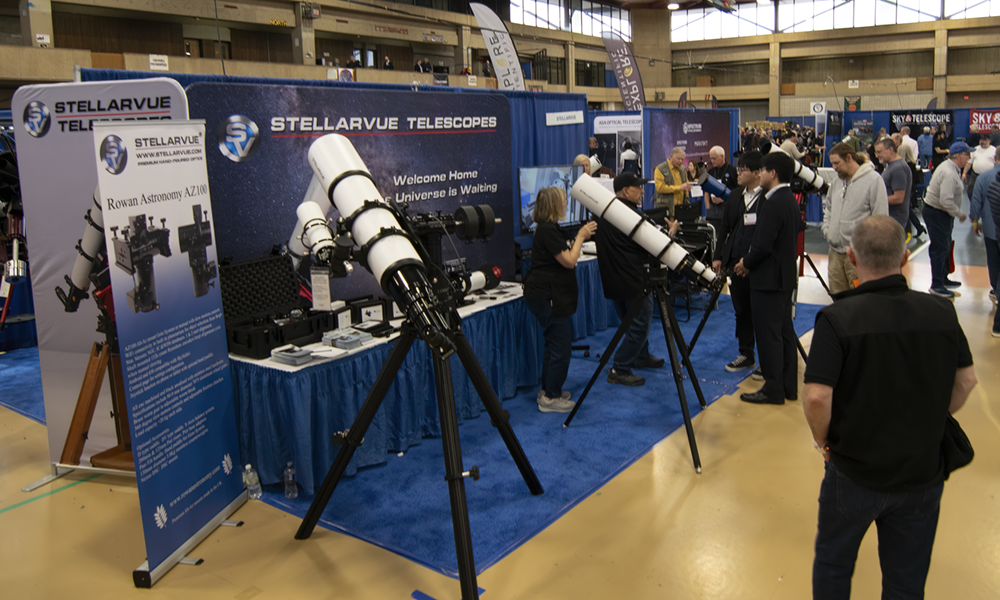
Tariffs Alarm the Amateur Astronomy Industry
Lenses, electronics, and many other telescope parts are made in Asia, putting even U.S.-based manufacturers in a bind.

Asteroid Vesta Now an Easy Catch in Binoculars
Vesta, both protoplanet and asteroid, reaches opposition on May 2nd. From a dark sky it's even visible with the naked eye.

Hints of Life on a Potential Ocean Planet
Astronomers might have detected hints of life on a faraway planet — but they need more observations before they can say for sure.

Meet Asteroid Donaldjohanson: Long and Lumpy
During a close flyby on April 20th, NASA’s Lucy spacecraft surprised its science team by revealing an asteroid that was once two smaller pieces that have been conjoined into a larger whole.

Plumes from Saturn's Moon Enceladus Might Come Straight from Its Hidden Ocean
Researchers reanalyzing Cassini data think the plumes from Enceladus might provide direct access to the Saturnian moon's underground ocean.

This Week's Sky at a Glance, April 18 – 27
Bright Jupiter is getting lower in the west week by week and is nearly at its farthest from Earth. But it's still the brightest point in the evening sky, qualifying as the "Little Evening Star" in the absence of Venus.

Webb Telescope Reveals What Happens When a Planet Spirals Into Its Star
When astronomers discovered a star that had swallowed its own planet, they found a surprise — the planet may have spiraled in to its demise.

NASA’s Space Science Budget: Major Cuts Loom Large
The space science community is deeply concerned after recent reports that NASA's budget would be halved.
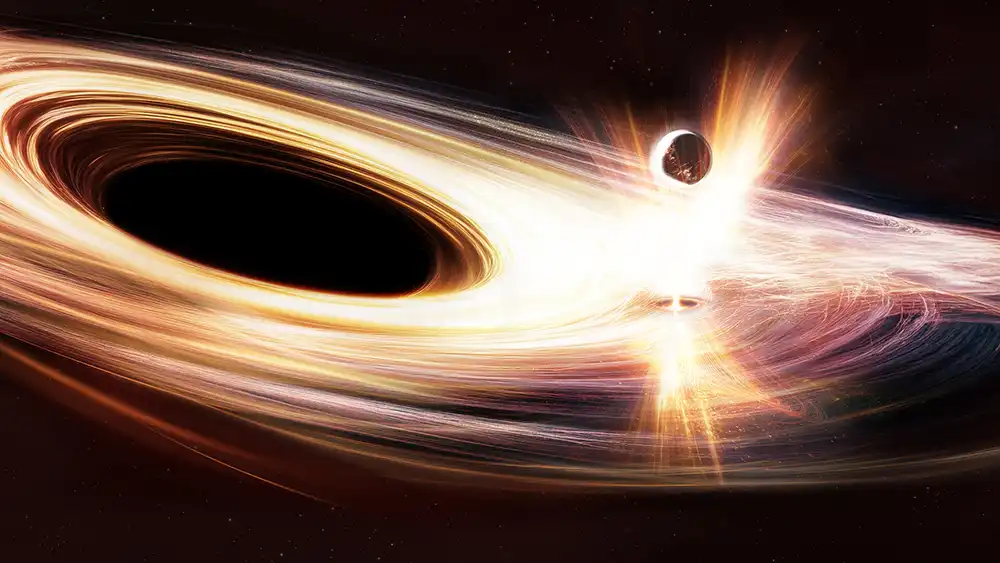
Supermassive Black Hole Wakes Up
Regular bursts of high-energy X-rays might herald the birth of active galactic nuclei, the supermassive black holes in galaxy cores.

See the Lyrid Meteor Shower the Night of April 21–22
The annual Lyrid meteor shower should put on a great show this year. Enjoy it with a dash of the "dark side" of Saturn's rings.

Simons Observatory: Big Bang Examiner
In February, Sky & Telescope Contributing Editor Govert Schilling visited three new astronomical observatories in northern Chile. This chronicle of the Simons Observatory is the first of a three-part blog series.

This Week's Sky at a Glance, April 11 – 20
The bright Moon pairs with Spica on Saturday the 12th. Three nights later, the waning Moon in the small hours occults one of the head stars of Scorpius.

New Gear at the Northeast Astronomy Forum
Smartscopes starred at this year's Northeast Astronomy Forum in New York, and Sky & Telescope welcomed conversations with our readers.
