 SUNSET:


Orionid Meteor Shower to Peak Oct. 20-24, 2006
The Orionid meteor shower isn't one of the year's richest, but it's pretty, producing up to 20 "shooting stars" per hour.
Airborne Observatory Rolls On
After narrowly avoiding the budget ax, the Stratospheric Observatory for Infrared Astronomy (SOFIA) is nearing its first flight.
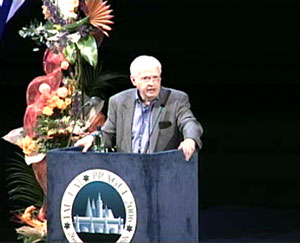
“The Day We Lost Pluto”
In order to resolve their ongoing debate over the definition of the word "planet," astronomers seem prepared to demote Pluto.
Planet Debate Heats Up
All hell broke loose when astronomers began openly debating the definition of the word "planet" at the general assembly of the International Astronomical Union in Prague.

What's a Planet?
The biggest question facing the world's professional astronomers, now gathered in Prague, is how to define the word "planet" and whether the definition should include Pluto.
Sky Publishing Launches New Web Site
The publisher of Sky & Telescope and Night Sky magazines unveils a destination Web site for stargazing enthusiasts of all levels.
Senators Step In to Save Space Science
The US Senate is moving to boost NASA's budget and restore funding for a host of space-science missions now on the chopping block.

What is a Sundog, and How Did "Sundogs" Get Their Name?
Why are "sundogs" called by that name? Bob Johnson / SkyandTelescope.com Photo Gallery Before answering the why question, let me answer the what question that comes before: namely, what is a sundog, or mock Sun, in the first place? A sundog is a concentrated patch of sunlight occasionally seen about…

How can a telescope have an f/ratio of f/42?
I was amazed at Jim Melka’s beautiful picture of Mars on page 136 of the January 2006 issue but puzzled by the caption, which said that he used a 12-inch reflector at f/42. How is this possible? Knowing that a telescope’s f/ratio is its focal length divided by its aperture,…

When will the last total solar eclipse occur?
With the Moon slowly receding from Earth, there will come a time when it no longer has sufficient angular size to cover the Sun completely. When will the last total solar eclipse occur? When the Moon’s at its closest and biggest and it can no longer cover the Sun at…

How can I see more colors through my telescope?
Nebulae and galaxies invariably look like shapeless, colorless blobs in my 6-inch telescope, a far cry from their spectacular appearance in photographs. If I buy a 12- or 14-inch scope, will I see a dramatic improvement? Would that it were so! A larger telescope will better reveal the shapes of…

Why Are There No Green Stars?
There are red stars, orange stars, yellow stars, and blue stars. Why no green stars?
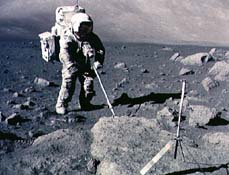
Could you see astronauts on the Moon?
If there were astronauts on the Moon, could we see them? I get some variant of this question almost every time I show someone his or her first view of the Moon through a telescope, especially at high magnification. The breathtaking sight of lunar craters, mountains, and other features down…

My Place in the Dark
Twenty weekends and countless trips to the building-supplies store later, I'd done it — I had an observatory to call my own.
Big Weekend at Big Bear
Amateur astronomers seeking dark skies and great bargains flocked to the 2006 RTMC Astronomy Expo in California for Memorial Day weekend.
NASA Budget Crisis Threatens Space Telescopes
Astronomers are worried that future space-astronomy missions will be downsized, delayed, or cancelled because of a financial crisis within the space agency.
NASA Resumes Work on Shuttle Flight to Hubble
NASA administrator Michael Griffin has told the Hubble servicing team to resume preparations for a possible shuttle flight to upgrade the telescope.
A Very Colorful Solar Eclipse
For the lucky few who witnessed totality in the Pacific Ocean, the half-minute solar eclipse of April 8, 2005, was a real dazzler.
President Nominates New NASA Chief
President George W. Bush has nominated physicist and aerospace engineer Michael D. Griffin to serve as the next administrator of the US space agency.
Picture Imperfect: NASA's Spitzer Space Telescope
Like Hubble before it, Spitzer has flawed optics. But in this case the problem is mostly aesthetic, with little or no impact on the observatory's scientific capabilities.
