 SUNSET:

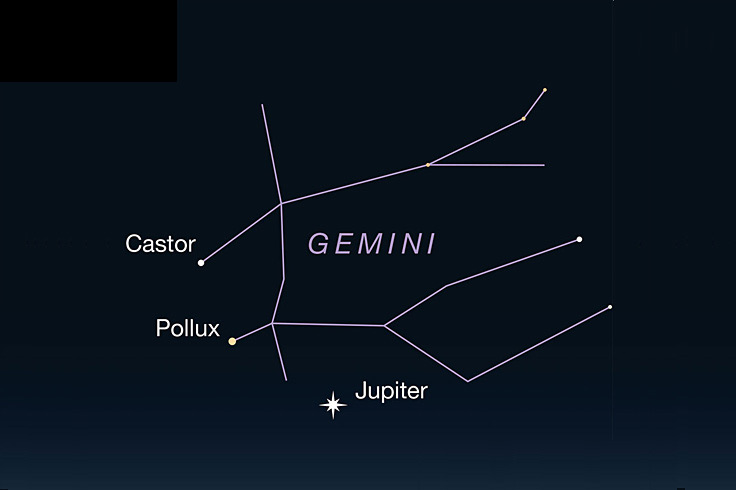
This Week's Sky at a Glance, December 12 – 21
Big Jupiter now rises in the east-southeast less than an hour after dark. It's high in sharp telescopic viewing by about 10 p.m.

Geminid Meteor Shower Peaks December 13-14
Great news! We'll have dark skies for the year's richest meteor shower.
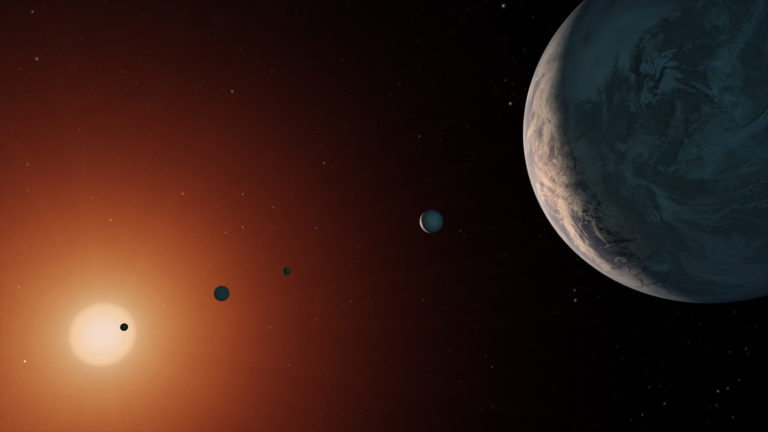
Webb’s First Look at TRAPPIST-1e Hints at a Titan-like Atmosphere
Observations from the James Webb Space Telescope suggest the planet might have a nitrogen-and-methane atmosphere — but more data are needed to rule out a bare rock scenario.
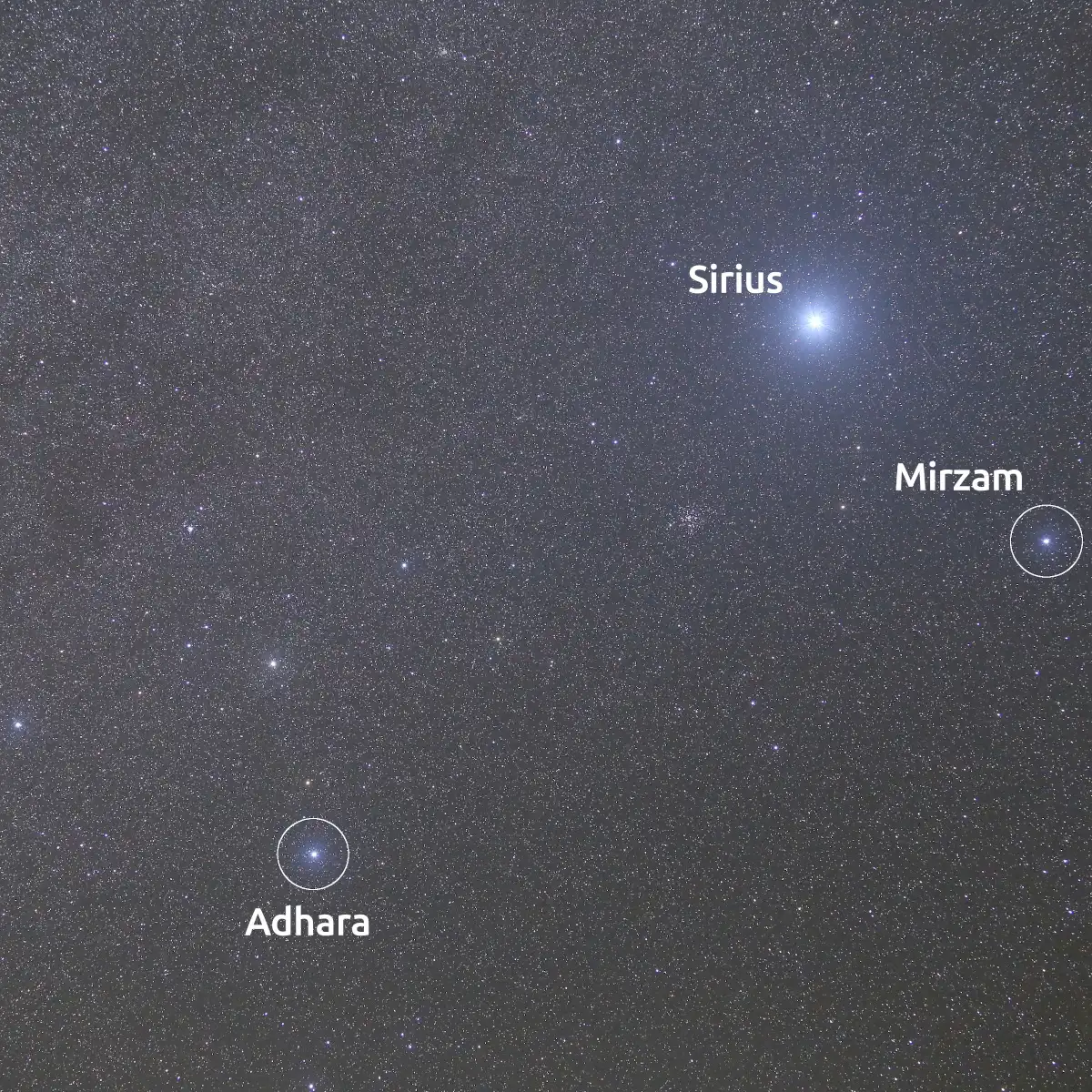
Two Stars Swept by the Solar System 4.5 Million Years Ago
Two winter stars left their mark long ago on wispy gas clouds near the solar system. Their passage might even have influenced life on Earth.

Galaxies Spin on Vast Filament Like a Teacup Ride
Astronomers have discovered one of the largest structures in the universe — and the galaxies within it — spinning like a fairground teacup ride.
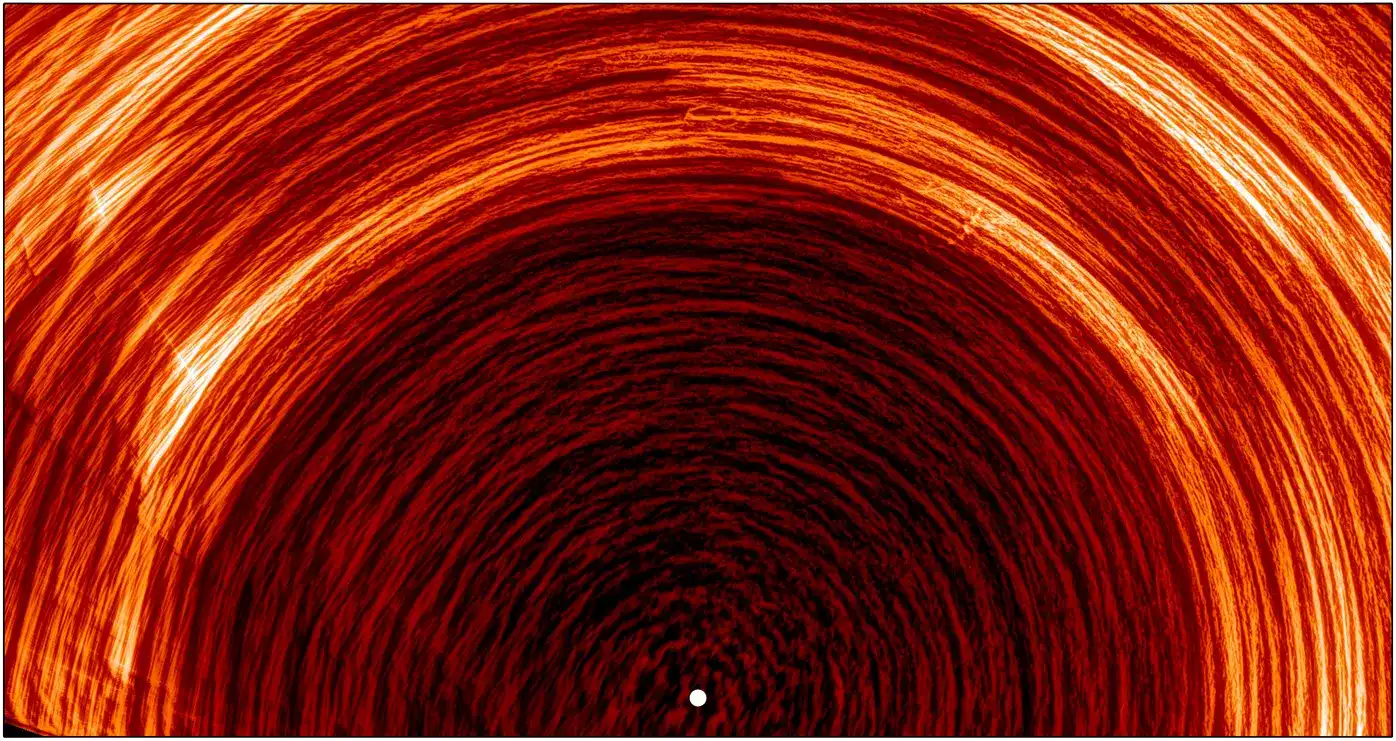
The Sun's Poles Are Different Than We Expected
A new analysis of the Solar Orbiter's unique views of the Sun's poles shows how a "conveyor belt" moves within our nearest star.
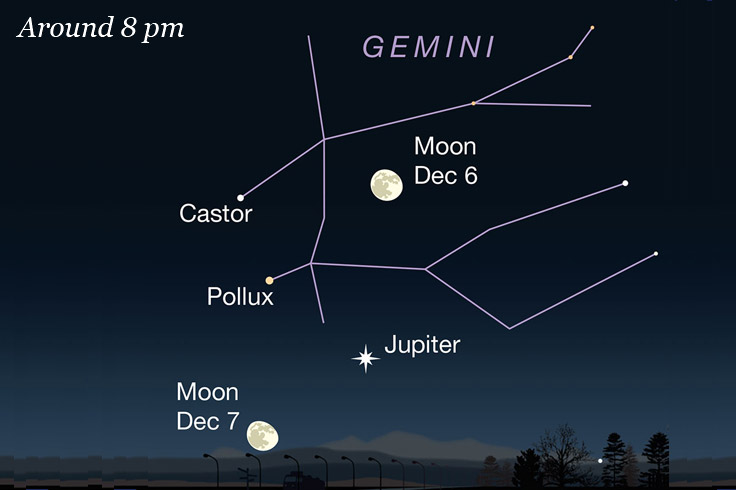
This Week's Sky at a Glance, December 5 – 14
The Moon, waning away from full, groups up with Jupiter, Castor and Pollux on two nights. Later in the week the Geminid meteor shower comes into full bloom.
Astronomy in Space with David Dickinson
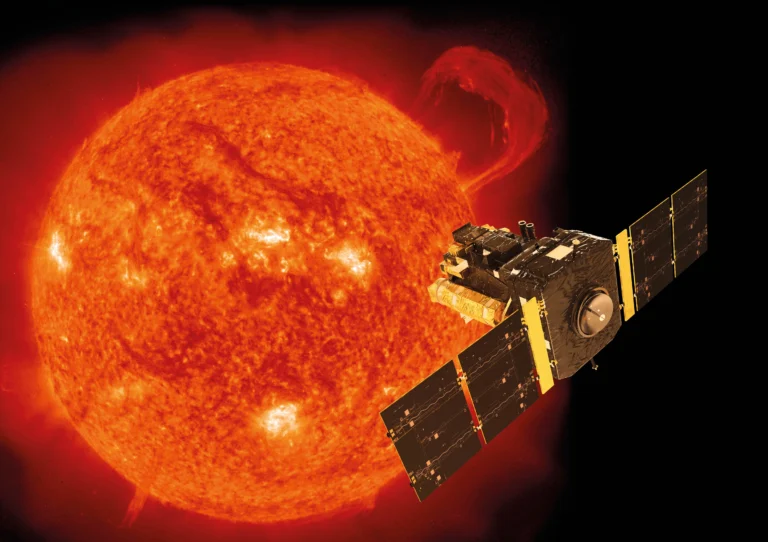
The Solar and Heliospheric Observatory Celebrates 30 Years in Space
The groundbreaking mission designed to observe our Sun and its interactions with Earth celebrates three decades in space this week.
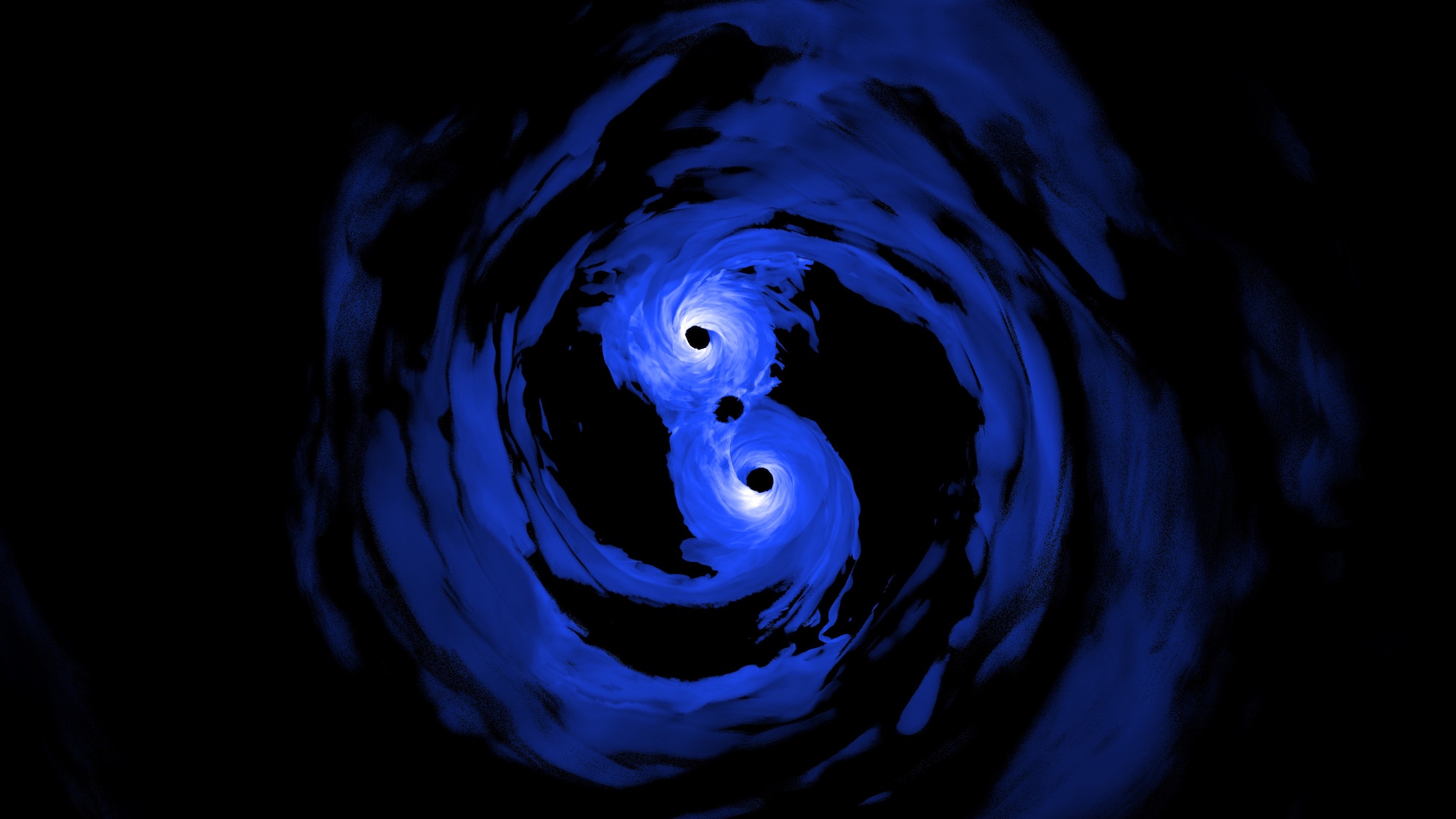
Boosting the Gravitational Wave Background
Why is the gravitational-wave background — the hum made by supermassive black holes colliding across the universe — stronger than expected?
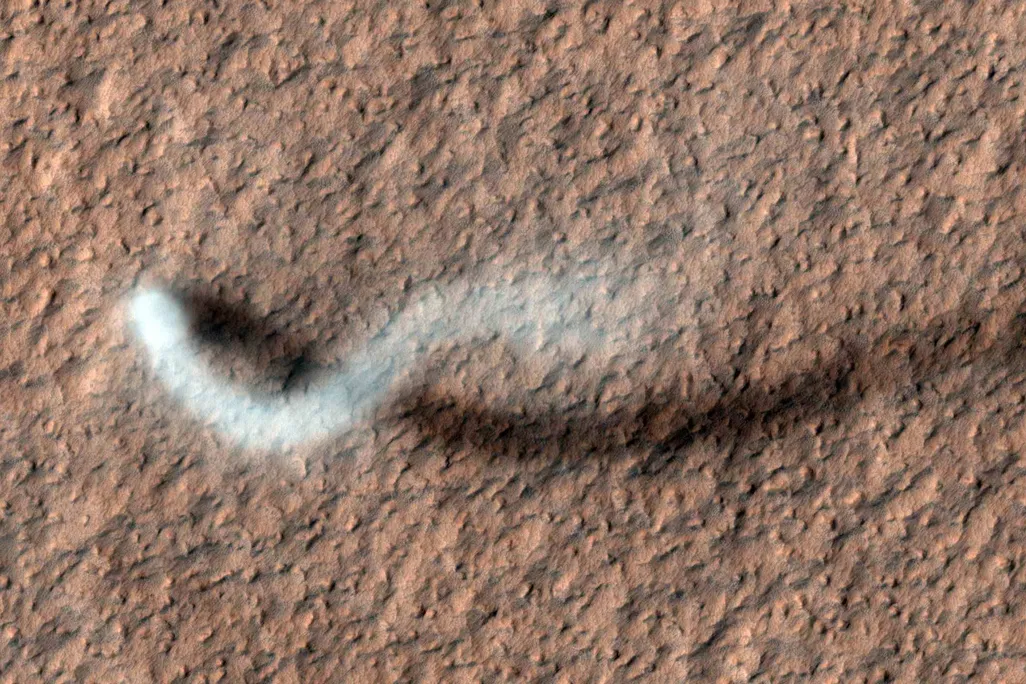
Tiny Sparks of Lightning Detected on Mars for the First Time
The microphone on NASA's Perseverance rover unexpectedly heard tiny claps of thunder from sparks caused by colliding dust grains.
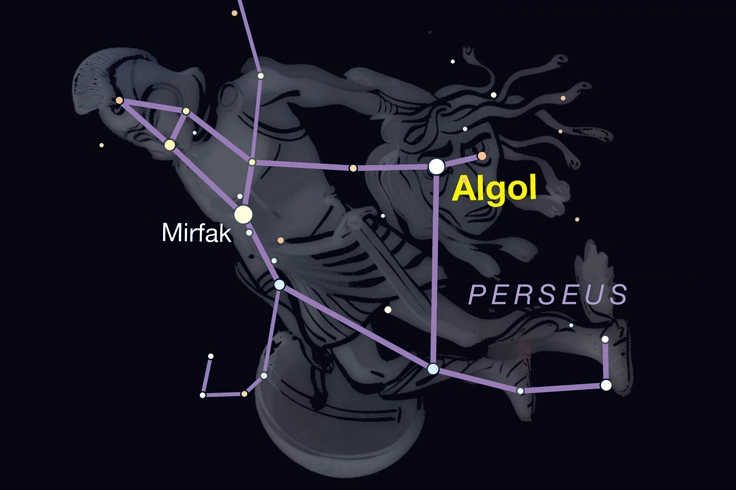
December Podcast: Find the “Demon Star”
During December you can watch for some impressive shooting stars and spend some time with the “Demon Star,” which can’t decide how bright it wants to be. Bundle up, grab your curiosity, and head outdoors for this month’s fun and informative Sky Tour.
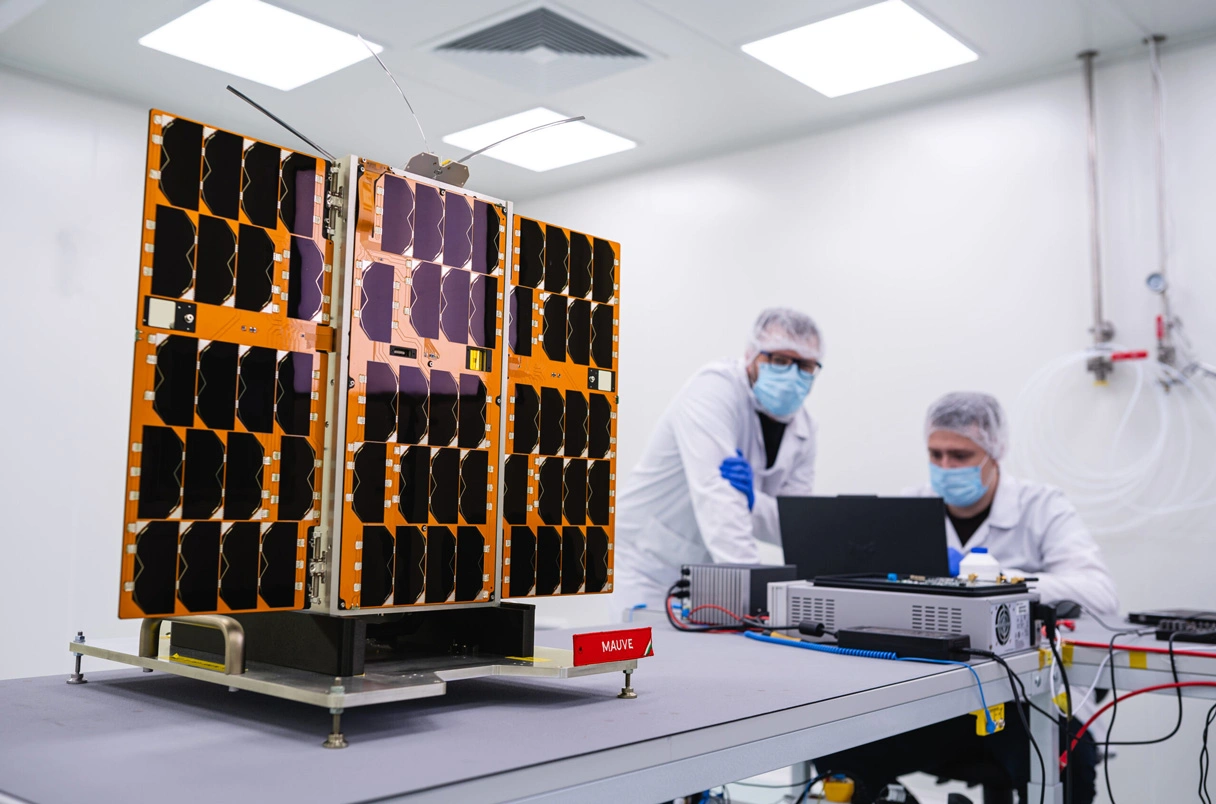
Astronomy in Space with David Dickinson
First Private Space Telescope Launches Successfully
A small space telescope may signal a big new trend for modern astronomy.
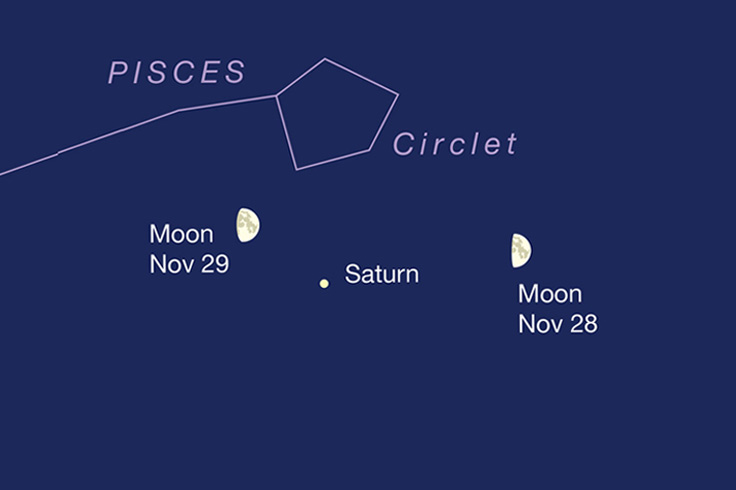
This Week's Sky at a Glance, November 28 – December 7
Saturn remains super-thin-ringed high after dark. The interstellar comet, 11th magnitude, is now nice and high in the dark before dawn. Don't wait; moonlight approaches.
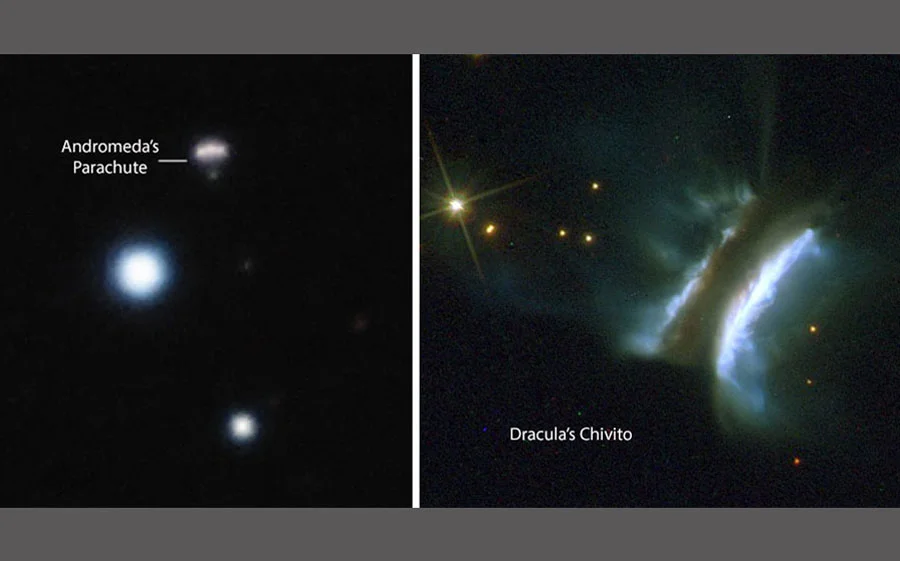
Lure of the Obscure — Andromeda's Parachute and Dracula's Chivito
Observers can't resist the challenge of seeking faint objects with curious names. We go deep and visit two — Andromeda's Parachute and Dracula's Chivito.
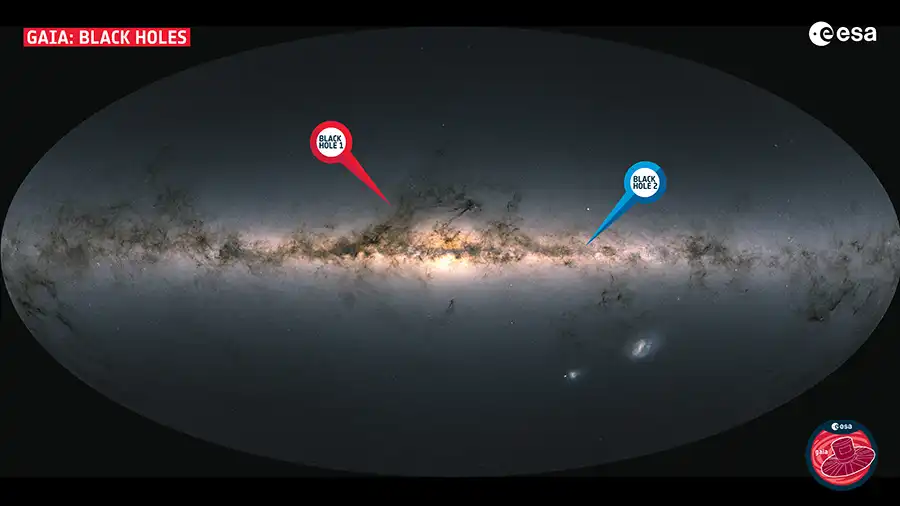
Red Giant “Star Songs” Reveal Their Chaotic, Pasts
Astronomers have tuned in to the celestial “songs” of two red giant stars to reveal their hidden histories — including a case of stellar cannibalism.
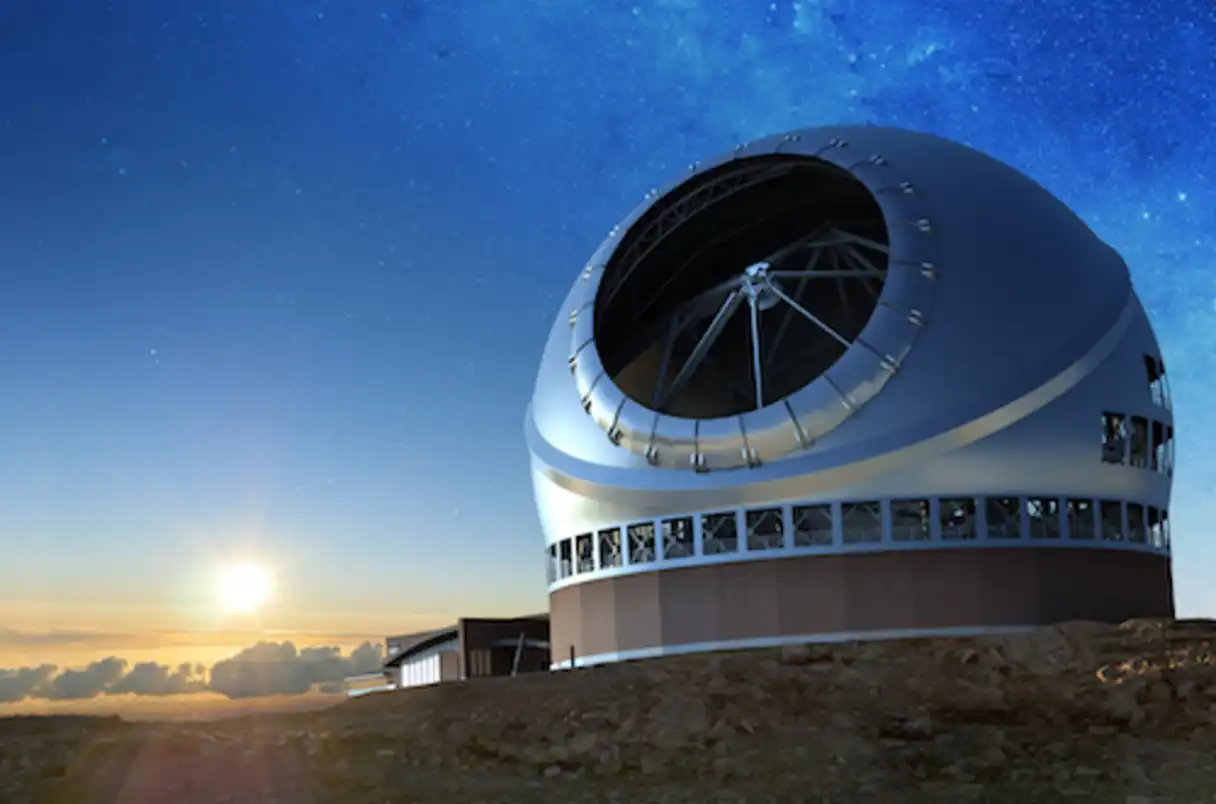
Thirty Meter Telescope Considers Move to Spain
Spain’s offer to host the powerful observatory, mired in funding obstacles and local controversies, might promise a new path forward.

Spot Uranus at Opposition
Uranus is its closest to Earth all year on the night of November 21st, and you can find it easily in the evening sky using Sky & Telescope’s exclusive star chart.

This Week's Sky at a Glance, November 21 – 30
Saturn's rings are now the closest to edge on that they'll get. The famous interstellar comet has become higher and easier for amateur telescopes before dawn.
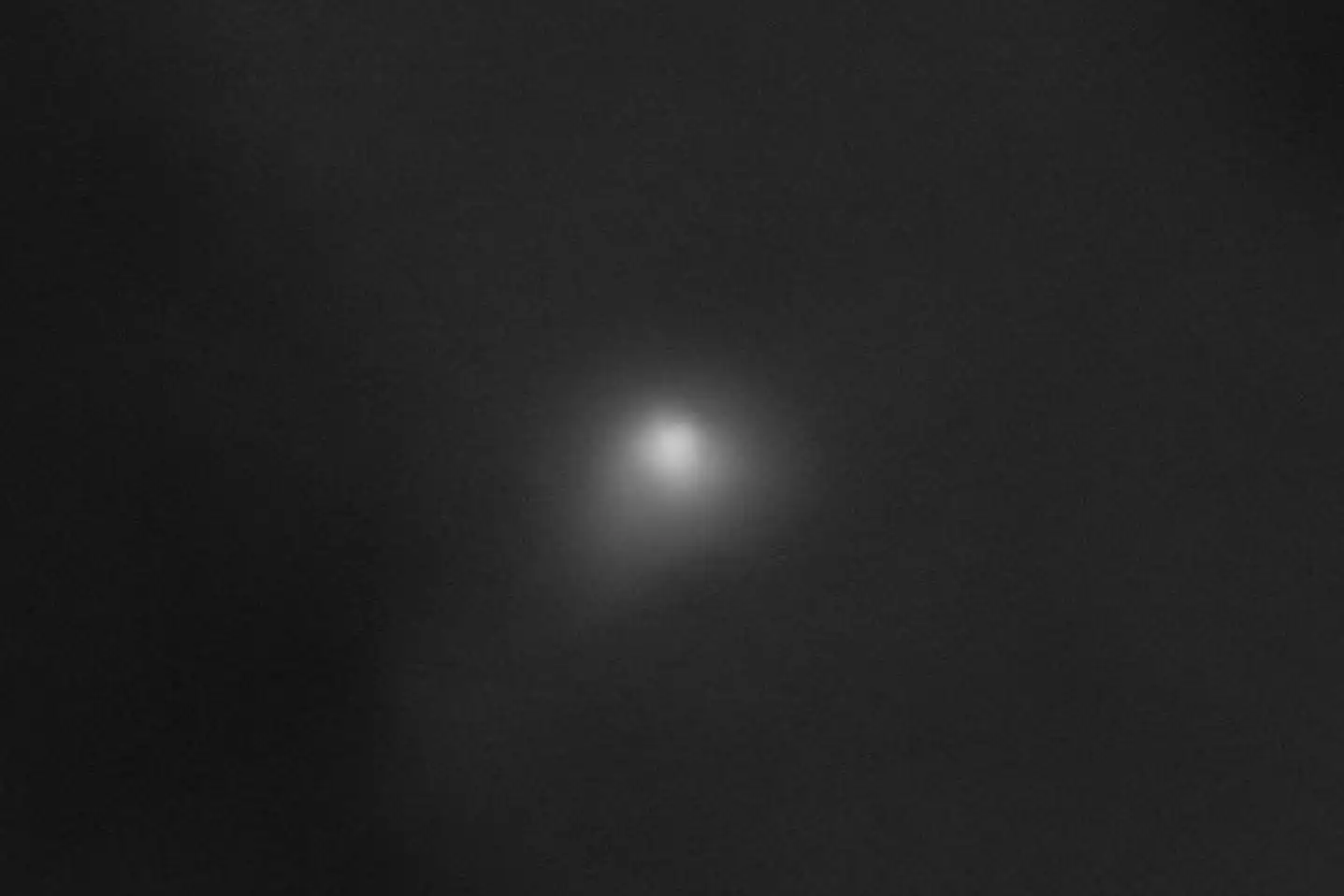
Updates on Interstellar Comet 3I/ATLAS: NASA Images, Many Tails, and Non-gravitational Forces
Now that Comet 3I/ATLAS has emerged from the Sun's glare, its behavior is being monitored by every available observatory.

Meet the Seven Sisters’ 3,000 Lost Siblings
The Pleiades star cluster is part of a much larger complex that stretches across the entire sky, a new study shows.
