 SUNSET:

A Solar-Cycle Climate Trigger
How can a change in the Sun's total brightness of just 0.01% alter weather patterns on Earth? Climate modelers think they've found the answer.
Can Magnetism Save a Vaporizing Planet?
The "hot Jupiter" HD 209458b caused a sensation when astronomers seemed to see its gaseous atmosphere leaking out into space. Now one team of researchers says a magnetic personality could prevent the planet from evaporating before our eyes.
Raging Fire Threatens Mount Wilson
One of the world's most famous and historic observatories is threatened by an out-of-control wildfire in California.
India's Chandrayaan 1 Goes Silent
Ground controllers abruptly lost contact with India's first lunar probe on August 29th, likely signaling the premature end of this promising mission.
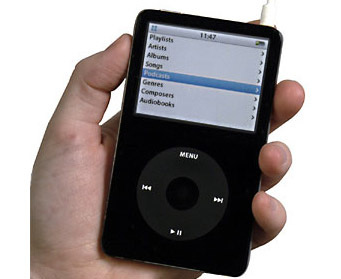
Tour September's Sky — By Ear and Eye!
Easy-to-spot Jupiter dominates the evening sky and dazzling Venus the morning sky. You'll learn where to find them and much more by listening to Sky & Telescope's downloadable guided tour of the night sky.
Jupiter's Impact: Gone in 30 Days
On July 19th an errant comet or asteroid struck the southern hemisphere of Jupiter and created a black-as-soot feature nearly the size of Earth. More than a month later, the last vestiges of this overnight sensation are fading from view.
Why Does Exoplanet WASP-18b Exist?
Observers have found a massive planet so close to its star that it orbits in less than a day. Either they were very, very lucky — or theorists really don't understand the inner workings of stars as well as they thought.

Were Asteroids Born Big?
Imagine if our solar system formed with an asteroid belt full of objects the size of Ceres — and no small stuff.
Podcast: An Ice-Age Impact?
Just under 13,000 years ago, the mammoth and several other large mammalian species vanished from North America. In a podcast, Ivan Semeniuk explores the controversial claim that the mass extinction was triggered by a comet impact and how microscopic diamonds hold the key to understanding what really happened.
Five Amateurs Win Comet Prize
The 2009 Edgar Wilson Award honors amateur astronomers who discovered five different comets in the last 12 months, proving that backyard comet hunting still thrives in this age of automated professional sky patrols.
Jupiter's Moons Dance for You!
Right now you can watch one of Jupiter's satellites hide another with its own disk or shadow. These pairings only happen every six years!
"Lights, Camera, Cue the Moons!"
Check out the impressive interplay of Io, larger Ganymede, and Io's shadow during a remarkable pairing of these Jovian moons captured on August 16th.

New Limits on the Big Bang
LIGO, the Laser Interferometer Gravitational-wave Observatory, has just announced its first big astronomy result: Two years of data rule out certain versions of the inflationary-universe theory of what drove the Big Bang.

Fermi Tracks Gamma-ray Pulsars
What spins hundreds of times per second, has 100 trillion times the Sun's density, and spews lethal radiation all over interstellar space? Astronomers are closer to knowing the answers, thanks to NASA's newest deep-space observatory.
The Stellafane Experience
The granddaddy of all stargazer gatherings attracts 1,000 attendees each summer to the wooded hills and dark skies near Springfield, Vermont.
Perseids Perform Beautifully!
Despite moonlight, this year's Perseid meteor shower has been pleasing millions worldwide.
A Tropical Tempest on Titan
In April 2008, after months of cloud-free skies, a massive storm erupted in the dense atmosphere of Saturn's largest moon.

Exoplanets' "Demolition Derby"
Within the past 1,000 years or so, two planet-size objects collided around the young star HD 172555 and created a titanic, white-hot fireball whose glassy ashes are still swarming around the star.

Good Times at ALCON 2009
Astronomers converge for a meeting of minds at Hofstra University in New York on August 7th and 8th.
Martian Meteorite in 3-D
Rolling along over the sandy Meridiani Plain on Mars, the tireless rover Opportunity has chanced upon a hefty iron-nickel meteorite. Grab your 3-D glasses for an eye-popping closer look!
